※本記事にはプロモーションが含まれています。
こんにちは!この記事は、英会話講師歴20年、オンライン英会話スクール「Coogee English Online」の運営者が解説しています
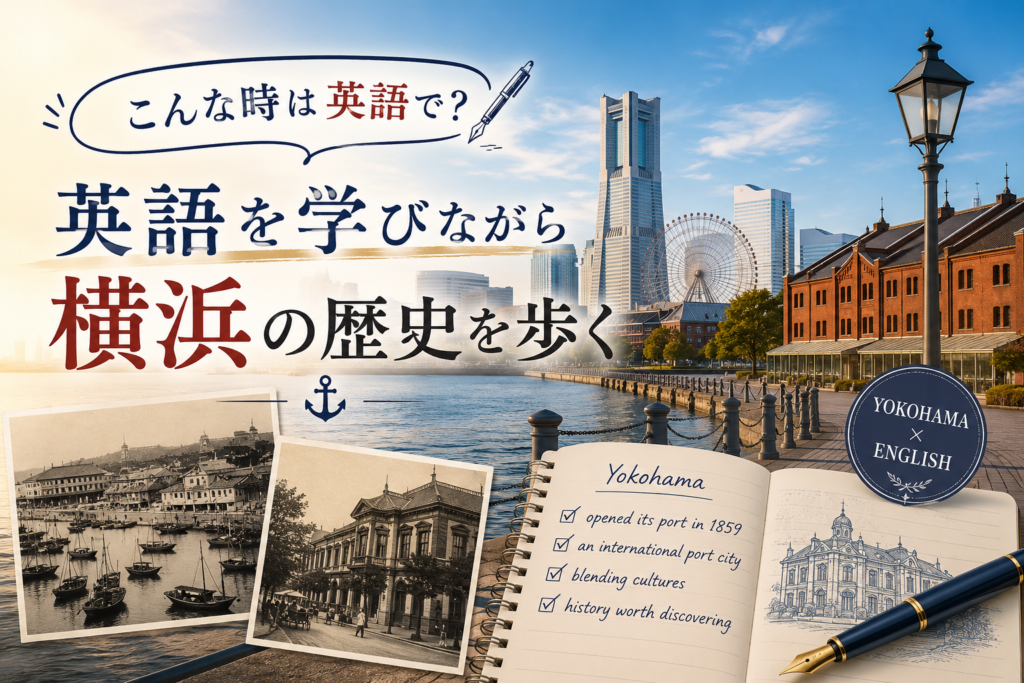
海を望む赤レンガの建物、坂の上に佇む西洋館、ガス灯が並ぶ馬車道。
横浜を歩いていると、日本のほかの都市とは少し違う、外国の文化が混ざり合ったような空気を感じます。
横浜はよく「異国情緒のある港町」と表現されますね。
けれど、そもそもなぜ横浜には、西洋風の建物や文化が多く残っているのでしょうか?
私は現在、横浜に住んでいますが、そこまで横浜についてめちゃくちゃ詳しいわけではありません。 なので今回は、皆さんに横浜をご紹介しながら、皆さんと一緒に横浜のことをもっとたくさん知っていけたらいいなって思っています。 内容てんこ盛りで、読み応えありますよ〜!
なお、記事の途中には「こんな時は英語で?」というミニコーナーも入れてあります。
英語が少し難しく感じる場合は、日本語の歴史部分だけでも十分楽しめるので、まずは楽しみながら最後まで読んでみてくださいね!
横浜 Yokohama
その始まりをたどると、江戸時代の終わりに行き着きます。 そう、私が愛してやまない「幕末」です。 幕末から、明治…この時代は本当に熱い。 まさに「おーい!竜馬」「燃えよ剣」さらには、「るろうに剣心」の、あの時代です!
1859年の開港をきっかけに、横浜は日本と世界を結ぶ港町として急速に発展しました。 外国から新しい技術や文化が入り、日本の生糸や茶などが海外へ渡っていった場所でもあります。
現在の横浜に残る異国情緒は、単なるおしゃれな街並みというわけではありません。 それは、日本が長く続いた江戸の時代から新しい時代へ進み、初めて本格的に世界と向き合った歴史の跡なのです。
ちなみに、私の中で横浜といえば、浜スタ、中華街、みなとみらい、赤い靴履いてた〜の舞台、くらいしかイメージなかったんですが、引っ越してきてから、改めて横浜を調べてみると結構驚くことも多いんですよ。 一番驚いたのが、まさに先ほど登場した横浜の港、「横浜開港記念日」が、私の誕生日である、ってことです。 一気にご縁を感じちゃいました!
ということで、この記事では、横浜がなぜ異国情緒あふれる街になったのか? その歴史を、街に残る場所とともにたどってみましょう。
この記事は「日本文化を英語で語る」シリーズの一記事です
Why Does Yokohama Feel So Different?
When you walk around Yokohama, you may notice something unique.
The red brick warehouses by the waterfront, Western-style houses on the hills, and old-fashioned gas lamps along Bashamichi give the city a very different atmosphere from many other places in Japan.
People often describe Yokohama as “a city with an international atmosphere.”
But have you ever wondered why so many Western-style buildings and cultural influences remain here?
I live in Yokohama myself, but I’m not a history expert. In fact, after moving here, I realized there was still so much I didn’t know about the city.
So in this article, I’d like to explore Yokohama’s history together with you while introducing some of its most interesting places.
Yokohama’s Story Begins…
To discover where it all began, we need to travel back to the final years of the Edo period—yes, the Bakumatsu, my favorite period in Japanese history.
After the Port of Yokohama opened in 1859, the city quickly grew into an international port connecting Japan with the rest of the world.
New technologies and ideas arrived from overseas, while Japanese silk and tea were exported to other countries.
The international atmosphere that Yokohama is famous for today is much more than beautiful Western-style buildings.
It is the trace of a remarkable period in history when Japan began opening itself to the world after centuries of isolation.
Before moving here, my image of Yokohama was pretty simple: Yokohama Stadium, Chinatown, Minato Mirai, and the famous song “The Girl in the Red Shoes.”
But after I started living here and learning more about the city, I discovered many fascinating stories.
The biggest surprise?
I found out that Yokohama Port Opening Memorial Day falls on my birthday!
That little coincidence made me feel an unexpected connection with the city.
So, let’s explore together how Yokohama became one of Japan’s most international cities, and discover the history that still lives on in its streets today.
- こんな時は英語で?|横浜の成り立ちを伝えてみよう
- 横浜は、もともとどのような場所だった?
- なぜ「神奈川」ではなく横浜が開港したの?
- 1859年の開港によって、横浜はどう変わった?
- 横浜開港資料館|横浜が世界と出会った歴史を知る場所
- 馬車道|新しい西洋文化が日本の暮らしへ入ってきた場所
- こんな時は英語で?|「文化の玄関口」を英語で伝える
- 横浜赤レンガ倉庫|おしゃれな商業施設になる前の役割とは?
- 山手西洋館|なぜ横浜の丘に洋館が残っているの?
- 横浜の「異国情緒」とは、文化が混ざり合った歴史の跡
- こんな時は英語で?|横浜の「異国情緒」をどう説明する?
- 横浜の歴史を感じながら、街を歩いてみよう
- まとめ|横浜の異国情緒は、日本と世界が出会った歴史から生まれた
こんな時は英語で?|横浜の成り立ちを伝えてみよう
日本語では?
横浜は、1859年の開港をきっかけに国際的な港町へと発展しました。
英語で伝えるなら
Yokohama developed into an international port city after its port opened in 1859.
英語講師のひと言
「〜へと発展した」は、英語ではdeveloped into 〜と表現できます。単にbecame an international port cityと言っても意味は通じますよ! でもここで、developed intoを使うことで、小さな町が時間をかけて国際都市へ変化していった様子を表せます。 なお、「横浜港が開港した」は、Yokohama Port opened in 1859.とも表現できます。 日本語の感覚では「港が自分で開いたの?」と感じるかもしれませんが、英語では施設や店などの営業・運用が始まる場合、openを自動詞として使うことがあります。
横浜は、もともとどのような場所だった?
現在の横浜には、高層ビルが並ぶみなとみらいや、多くの人が訪れる人気の観光地が沢山あります。
しかし、開港当時の横浜は、現在のような大都市ではありませんでした。
横浜市の資料では、当時の横浜は港の施設がほとんどない小さな漁村だったと説明されています。 開港が決まると、現在の大さん橋の付け根付近に二つの波止場が造られました。
船が直接岸壁に着けられるような設備はまだなく、沖に停泊した船と陸の間を、小さな船が行き来して人や荷物を運んでいました。 今では日本有数の港町として知られる横浜ですが、その出発点は、港湾施設さえほとんどない海辺の村だったのです。
開港後、横浜には貿易に関わる商人や職人、外国人など、さまざまな人々が集まるようになります。 港の周辺には道路や商館、住宅、行政施設などが整えられ、横浜は短い期間で大きく姿を変えていきました。
What Was Yokohama Like Before It Became a Port City?
Today, Yokohama is known for its modern skyline, Minato Mirai, and many popular tourist attractions. However, when the city first opened its port to the world, it looked nothing like it does today.
According to historical records from the City of Yokohama, the area was originally a small fishing village with very few port facilities. After the decision was made to open the port in 1859, two simple piers were built near what is now Ōsanbashi Pier.
At that time, there were no large docks where ships could berth directly. Instead, vessels anchored offshore, and small boats transported passengers and cargo between the ships and the shore.
Although Yokohama is now one of Japan’s most important port cities, it began as a quiet seaside village with almost no harbor infrastructure.
After the port opened, merchants, craftsmen, government officials, and foreign residents gathered in Yokohama. Roads, trading houses, homes, and government buildings were gradually constructed around the port, and the town quickly transformed into an international gateway.
なぜ「神奈川」ではなく横浜が開港したの?
1858年、江戸幕府はアメリカをはじめとする国々と通商条約を結びました。 歴史の授業でやりましたね!
条約上、開港地として指定されたのは「神奈川」でした。 外国側が考えていた神奈川とは、東海道の宿場町として栄えていた神奈川宿、現在の横浜市神奈川区付近です。
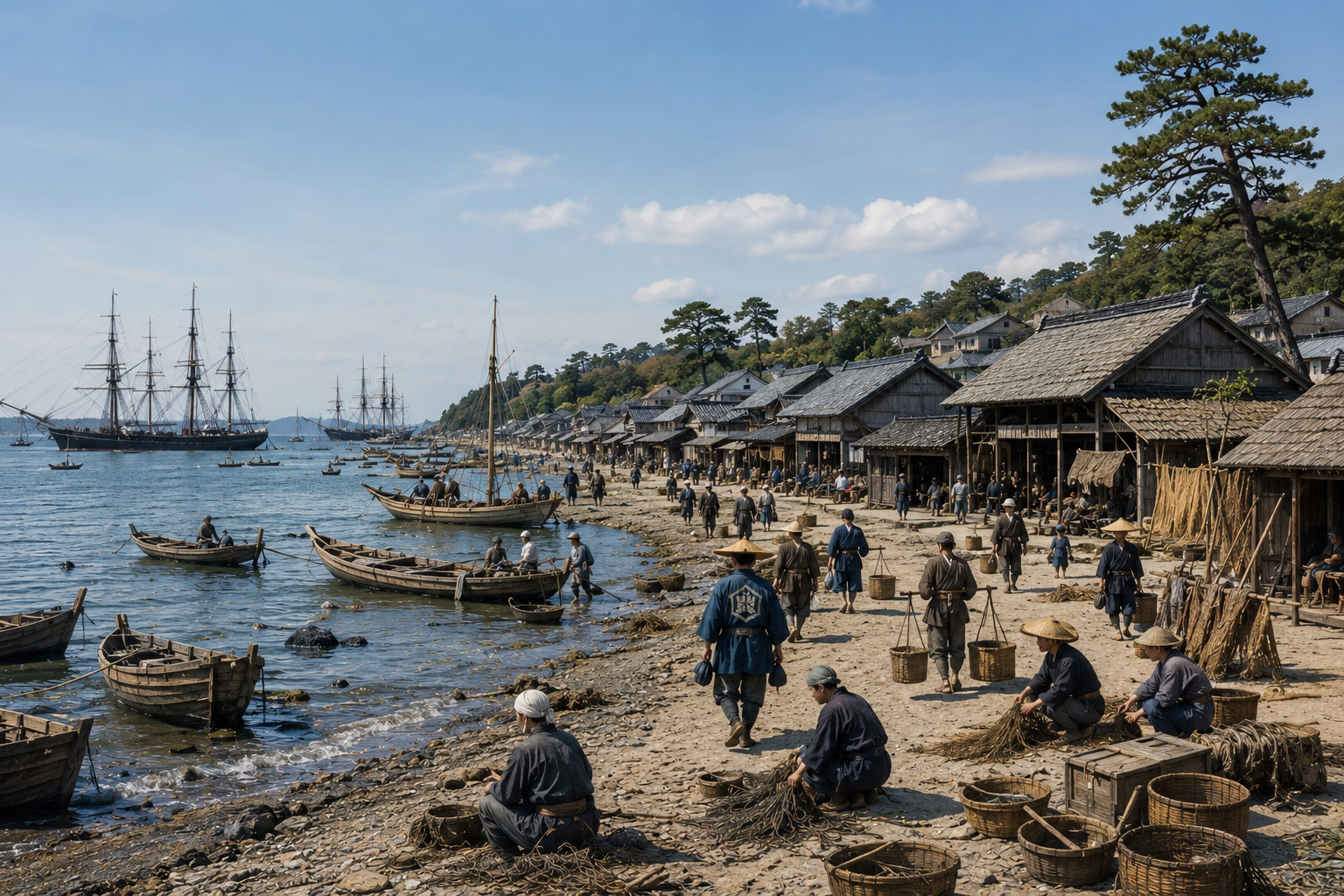
現在の横浜とは大違いの景色ですね…
幕府は当時、交通量の多い東海道の宿場町に外国人が出入りすることで、日本人との摩擦が生まれることを警戒しました。 その頃は、攘夷派、という外国勢力を武力で日本から追い出さんとする日本人が沢山いたからですね。
そこで幕府は、神奈川宿の対岸に位置していた横浜村も「神奈川」の一部だと主張し、横浜側に開港場を整備しました。 横浜の整備が進むにつれ、外国の領事館なども次第に横浜へ移っていきました。
つまり、横浜が世界へ開かれた背景には、
・江戸に比較的近いこと
・船が利用しやすい海があったこと
・東海道の往来から少し離れていたこと→地元の人々との衝突を回避するため
・何もない村だったので、新しい港町を一から整備しやすかったこと
など、当時の幕府のいろいろな裏事情がありました。 とても面白いですね!
歴史とは、最初から決められた一本の道ではありません。 さまざまな国の思惑や幕府の判断が重なった結果、当時はまだ小さかった横浜村が、日本を代表する国際港へと変わっていったのです。
Why Was Yokohama Opened as a Port Instead of Kanagawa?
In 1858, the Tokugawa shogunate signed treaties with the United States and several other countries to open Japan to international trade. If you studied Japanese history in school, you probably remember learning about this!
According to the treaties, the port that was supposed to open was Kanagawa. However, the “Kanagawa” that foreign countries expected was Kanagawa-juku, a busy post town along the Tokaido Road, located in what is now Kanagawa Ward in Yokohama. It looked completely different from the Yokohama we know today.
At that time, the shogunate was concerned that allowing foreigners to enter a crowded post town on the Tokaido Road could lead to conflicts with local Japanese people. Many people in Japan supported the Sonno Joi movement, which aimed to drive foreigners out of the country by force.
To avoid these problems, the shogunate argued that Yokohama Village, located across the inlet from Kanagawa-juku, was also part of “Kanagawa.” Instead of opening the port in the busy post town, they developed a new port in Yokohama Village. As the new port grew, foreign consulates and other international facilities gradually moved there.
In other words, Yokohama became Japan’s gateway to the world for several reasons:
- It was relatively close to Edo (present-day Tokyo).
- It had a coastline suitable for ships.
- It was slightly away from the busy Tokaido Road, making it easier to avoid conflicts between foreigners and local residents.
- Since it was only a small village, it was easier to build a completely new port town from scratch.
Behind Yokohama’s international success were many political decisions and practical considerations made by the shogunate. Isn’t that fascinating?
History is never a straight path that was decided from the beginning. It is shaped by countless decisions, different interests, and unexpected circumstances. As a result, the small fishing village of Yokohama eventually grew into one of Japan’s most important international ports.
1859年の開港によって、横浜はどう変わった?
1859年7月1日、旧暦では安政6年6月2日に、横浜港は開港しました。 開港後の横浜には外国人居留地が設けられ、外国の商人や外交官などが暮らすようになります。
港には海外から綿織物などが運び込まれ、日本からは生糸や茶などが輸出されました。 特に生糸は、日本の近代化を経済面から支えた重要な輸出品となりました。 横浜は、外国の文化が日本へ入ってくる入口であると同時に、日本の品物や文化が海外へ出ていく出口でもあったのです。
新しい文化や技術に触れた当時の人々は、どのように感じたのでしょうか?
外国語、洋服、ガス灯、写真、鉄道、洋食。 江戸時代の暮らしとは大きく異なるものが、目の前に次々と現れます。 おそらく驚きや戸惑いを感じながらも、その新しさを受け入れ、日本の暮らしに合う形へ変えていったのでしょう。
現在の横浜に残る独特な文化は、外国文化をそのまま取り入れた結果だけではありません。
日本人と外国人が出会い、互いの文化が行き交い、少しずつ混ざり合ったことによって生まれたものなんですね!
How Did Yokohama Change After the Port Opened in 1859?
On July 1, 1859 (June 2, 1859, according to the old Japanese calendar), the Port of Yokohama officially opened to international trade.
After the port opened, a foreign settlement was established in Yokohama, where foreign merchants, diplomats, and other residents began to live.
Ships brought cotton textiles and many other goods from overseas, while Japan exported products such as raw silk and tea. Among these exports, raw silk became one of Japan’s most important products, helping support the country’s modernization.
In other words, Yokohama was not only the gateway through which foreign culture entered Japan, but also the gateway through which Japanese products and culture reached the rest of the world.
How do you think people at that time felt when they encountered so many new cultures and technologies?
Foreign languages, Western clothing, gas lamps, photography, railways, and Western-style food—things that were completely different from life in the Edo period suddenly appeared before their eyes. They were probably surprised and sometimes confused, but they gradually accepted these new ideas and adapted them to fit Japanese life.
The unique culture that still exists in Yokohama today was not created simply by adopting Western culture.
Instead, it was born through the encounters between Japanese people and foreigners. As their cultures met, influenced one another, and gradually blended together, Yokohama developed the distinctive character that we can still experience today.
横浜開港資料館|横浜が世界と出会った歴史を知る場所
横浜の開港の歴史を最初に知るなら、横浜開港資料館は欠かせません。 横浜開港資料館は、幕末から昭和初期までの横浜に関する歴史資料を収蔵している施設です。
古文書、絵地図、浮世絵、古写真、海外資料などを通して、開港によって横浜の町と人々の暮らしがどのように変化したのかを知ることができます。 こういうの、私…大好物です!
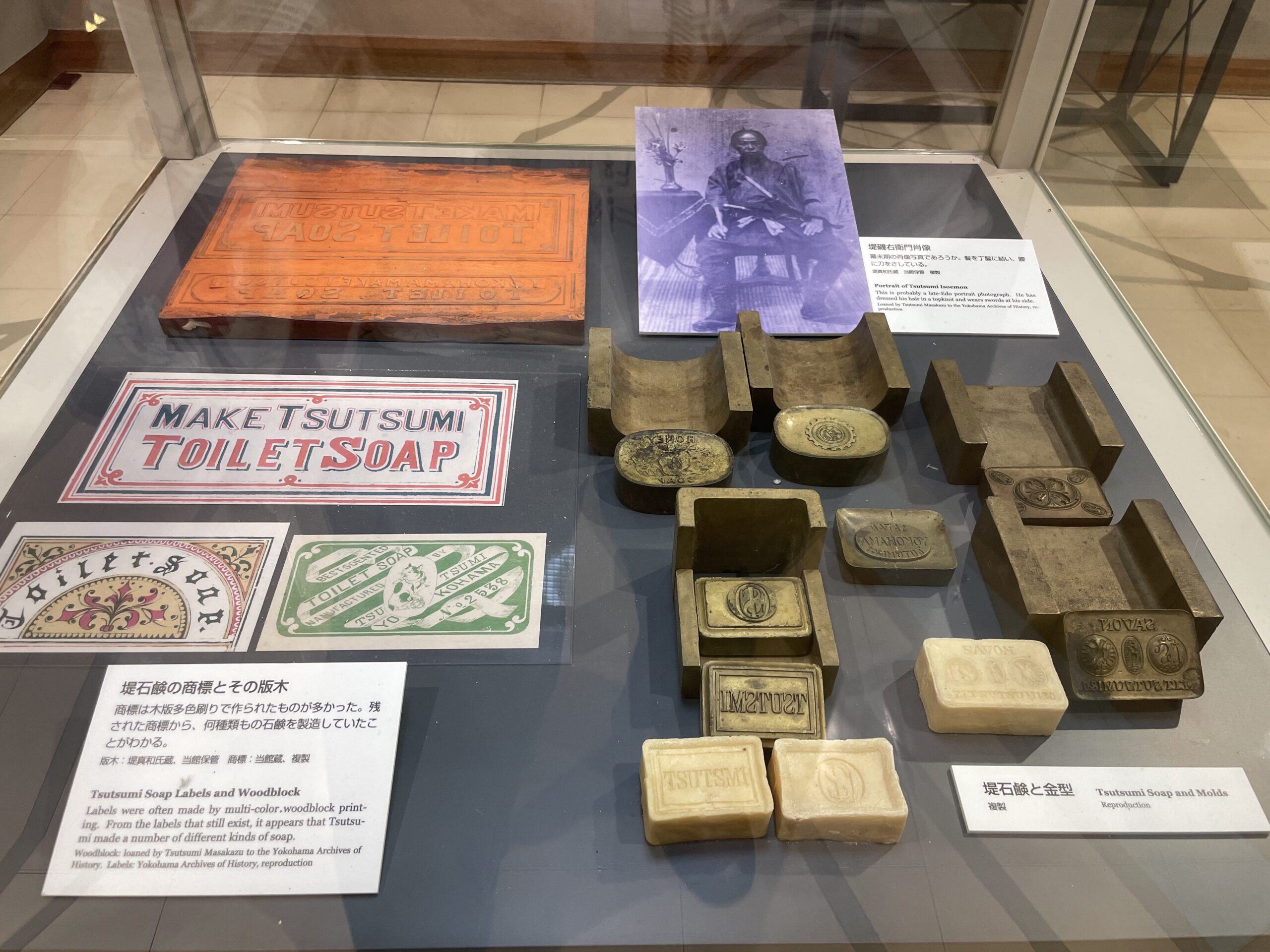
この写真は、私がこの横浜開港資料館を訪れた時に一番印象に残った「堤磯右衛門」さんのコーナー。
彼は日本で初めて国産石鹸の製造に成功した実業家。フランス人から石鹸の製造方法を教わり、横浜で試行錯誤を重ね、1873年、製造に成功。翌年、堤石鹸製造所を開設しました。
建物を出るとすぐそこには、ギフトショップがあり、そこに彼の石鹸が売っています。気になる方は是非!いい香りで、泡立ちも良く、とても気に入っています。 箱のデザインは、当時のままですよ。
この資料館が建つ場所は、開港の歴史そのものとも深く関わっています。
敷地内には、日米和親条約締結の地に残る「玉楠の木」があります。 現在の建物の一部は、旧イギリス総領事館として使われていたものです。 展示の中に、この楠が黒船来航の一場面の右端に写っていて、わぁ!当時もここにあったんだー!って感動しちゃいました。
展示を見てから横浜の街を歩くと、赤レンガ倉庫や山手の西洋館も、単なる写真映えする建物ではなくなります。 目の前にある建物が、横浜の歴史の中でどのような役割を担っていたのか?
その背景を知ることで、街の見え方が少しだけ変わってくるはずです。 昼と夜の雰囲気もまたガラッと違って2度楽しめますよ!
Yokohama Archives of History: A Place to Discover How Yokohama Met the World
If you want to begin exploring the history of Yokohama’s opening to international trade, the Yokohama Archives of History is an essential place to visit.
The museum preserves historical materials related to Yokohama from the final years of the Tokugawa shogunate through the early Showa period.
Through old documents, illustrated maps, ukiyo-e prints, historical photographs, and materials from overseas, visitors can learn how the opening of the port transformed both the city of Yokohama and the daily lives of its people.
This is exactly the kind of place I love!
The site of the museum itself is also closely connected to the history of Yokohama’s opening.
Within the grounds stands the historic Tamakusu tree, which marks the site where the Convention of Kanagawa was signed. Part of the present museum building was once used as the British Consulate General.
After seeing the exhibitions, walking around Yokohama feels completely different. The Red Brick Warehouse and the Western-style houses in Yamate are no longer simply photogenic buildings.
You may begin to wonder what role each building played in Yokohama’s history.
Once you understand the stories behind them, the city may start to look a little different.
Yokohama also has a completely different atmosphere during the day and at night, so you can enjoy the city in two very different ways!
馬車道|新しい西洋文化が日本の暮らしへ入ってきた場所
横浜には「日本初」や「発祥の地」と呼ばれるものが数多くあるそうですよ。
鉄道、ガス灯、近代水道、電話、日刊新聞など、現在では当たり前に使われているものの中にも、横浜から日本へ広がったとされるものがあります。
なかでも馬車道は、横浜の開港と文明開化を感じられる場所です。 「馬車道」という名前は、外国人が乗った馬車が行き交ったことに由来するといわれています。
明治時代になると、馬車道周辺にはガス灯がともり、洋風の建物や商店が並びました。
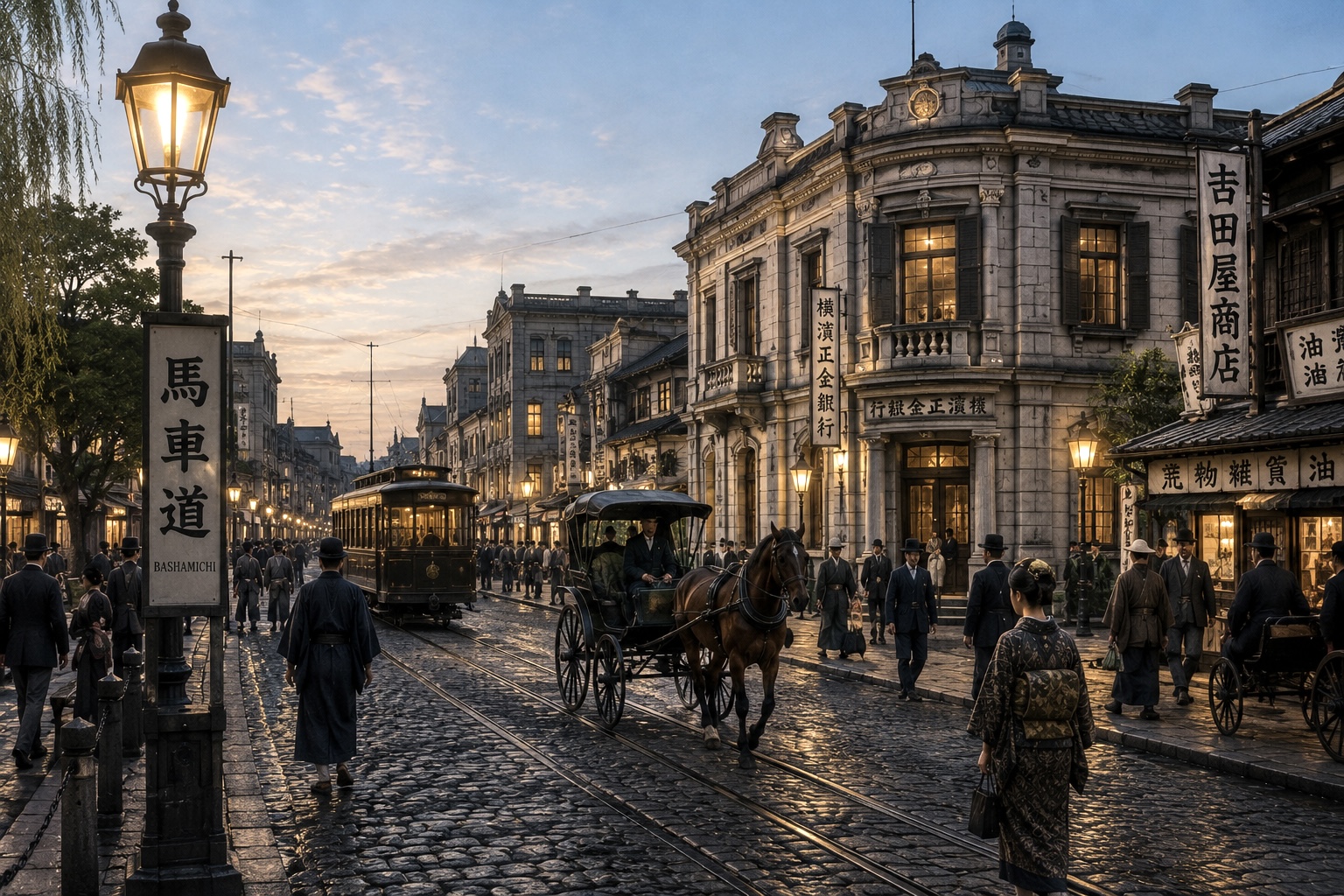
1872年には、横浜で日本初のガス事業によるガス灯が点火されました。 現在の馬車道にも、当時の姿をイメージしたガス灯が設置されています。 夜になれば自動的に街が明るくなる現代とは違い、暗くなれば提灯や行灯の光に頼っていた時代です。 初めてガス灯の明るさを見た人々にとって、その光景は未来の街を見ているように感じられたかもしれません。
馬車道を歩くときは、「ここには何があるのかな?」だけでなく、この街並みを、江戸時代を生きていた人が初めて見たら、どう感じたんだろう? と、ぜひ想像してみてください。
歴史というものが、ただ年号を覚えるだけのものではなく、街並みの変化、風景の移り変わり、その時代を生きた人々一人ひとりの驚きや戸惑いを含んだ物語として、違ったものに見えてきます。
かく言う私も、大人になってからそれが実感として得られるようになったので、皆さんは焦ることはないですよ!
Bashamichi: Where Western Culture Became Part of Everyday Life in Japan
Did you know that Yokohama is home to many places known as the “first” or the birthplace of something in Japan?
Railways, gas lamps, modern waterworks, telephones, and daily newspapers are just a few examples of things that are said to have spread throughout Japan from Yokohama.
Among them, Bashamichi is one of the best places to experience the spirit of Yokohama’s opening to the world and Japan’s period of modernization. The name Bashamichi, which literally means “Horse Carriage Street,” is said to come from the horse-drawn carriages used by foreigners that once traveled along this road.
During the Meiji period, gas lamps illuminated the street, while Western-style buildings and shops lined both sides of the road.
In 1872, Yokohama became the first city in Japan to light streets with gas lamps as part of a modern gas service. Today, replicas of those historic gas lamps can still be seen along Bashamichi.
Unlike today, when city streets automatically light up after sunset, people in those days relied on lanterns and traditional oil lamps after dark. For those who saw the bright glow of gas lamps for the first time, it may have felt as if they were looking at a city from the future.
When you walk along Bashamichi, don’t just wonder, “What can I see here?” Instead, try asking yourself, “How would people from the Edo period have felt if they had suddenly seen this street?”
History is much more than memorizing dates. It is the story of changing streets, evolving landscapes, and the surprise, curiosity, and uncertainty experienced by the people who lived through those changes.
To be honest, I didn’t truly begin to appreciate that until I became an adult. So if history doesn’t seem exciting to you yet, don’t worry. Sometimes, these stories become much more meaningful later in life.
こんな時は英語で?|「文化の玄関口」を英語で伝える
日本語では?
横浜は、西洋文化が日本へ入ってくる重要な玄関口の一つでした。
英語で伝えるなら
Yokohama was one of the major gateways through which Western culture entered Japan.
英語講師のひと言
日本語では、文化や貿易の入口を「玄関口」と表現します。しかし、英語で単純にentranceと訳すと、建物の入口という印象が強くなります。 国や地域、文化などへつながる入口を表したい場合は、gatewayが自然です。 高輪ゲートウェイ駅、も、それが理由で付けられた名前ですね。
a gateway to the world(世界への玄関口)
a gateway between Japan and other countries(日本と外国を結ぶ玄関口)
また、through which Western culture entered Japanは、直訳すると「そこを通って西洋文化が日本へ入った」となります。 少し難しく感じる場合は、次のように二つの文に分けても大丈夫です。
Yokohama was an important gateway to Japan. Many Western ideas and technologies entered the country through the port.
(横浜は日本への重要な玄関口でした。多くの西洋の考え方や技術が、この港を通して日本へ入ってきました。)
英語は、必ずしも一文で格好よく説明する必要はありません。 伝えたい内容を短い文に分けることも、伝えたい内容を相手に正確に伝えるための大切な方法です。
横浜赤レンガ倉庫|おしゃれな商業施設になる前の役割とは?
現在の横浜赤レンガ倉庫には、ショップやレストランが入り、季節ごとにさまざまなイベントが開催されています。 私も過去に、Strawberry Festivalや、Jack Johnsonのライブなどで訪れたことがあります。 すぐ近くに海が見えて、とっても素敵なところです。
ですが意外なことに、ここはもともと買い物や食事を楽しむために建てられた施設ではありませんでした。
横浜赤レンガ倉庫は、横浜港の貿易を支えるための保税倉庫として建設されました。
当時は「横浜税関新港埠頭倉庫」と呼ばれ、輸入手続きが済んでいない海外からの物資などを、一時的に保管する役割を担っていました。 2号倉庫は1911年、1号倉庫は1913年に完成しています。
新港ふ頭には、倉庫だけでなく、貨物を運ぶ鉄道やクレーンなども整備されました。 それは、当時の日本にとって非常に近代的な港湾施設でした。 ハンマーヘッド、と呼ばれる場所もありますね!
現在、私たちが赤レンガ倉庫を見て「横浜らしい」「異国情緒がある」と感じるのは、レンガ造りの美しさだけが理由ではありません。 そこには、海外から多くの品物が運ばれ、人々が働き、日本の経済を支えた歴史があったんですね。
そして、建物の役割は時代とともに変わりました。
しかし、古い建物を壊してしまうのではなく、新しい使い方を与えながら残したことで、私たちは現在も横浜港の歴史に触れることができます。 赤レンガ倉庫の近くには、横浜ワールドポーターズというショッピングモールもあり、現在あの辺り一帯だけでもかなり楽しめる人気スポットへと変貌を遂げました。
Yokohama Red Brick Warehouse: What Was It Before It Became a Popular Shopping Destination?
Today, the Yokohama Red Brick Warehouse is home to a variety of shops, restaurants, and seasonal events.
I’ve visited several times myself, including for the Strawberry Festival and a Jack Johnson concert. With the sea just a short walk away, it’s one of my favorite places to spend the day.
Surprisingly, however, the buildings were not originally constructed for shopping or dining.
The Yokohama Red Brick Warehouse was built as a bonded warehouse to support international trade through the Port of Yokohama.
Originally known as the Yokohama Customs Shinko Pier Warehouse, it was used to temporarily store imported goods before they cleared customs. Warehouse No. 2 was completed in 1911, followed by Warehouse No. 1 in 1913.
The Shinko Pier area was equipped not only with warehouses but also with railway tracks and cranes for transporting cargo. At the time, it was one of Japan’s most modern port facilities. Today, you can also visit the nearby Hammerhead area, which still reflects the district’s maritime heritage.
When we look at the Red Brick Warehouse today, many of us think, “This feels so much like Yokohama,” or “It has such an international atmosphere.”
But that feeling comes from more than just its beautiful brick architecture.
Behind these buildings is a history of ships arriving from overseas, goods being unloaded, people working at the port, and international trade helping to support Japan’s growing economy.
As time passed, the role of the buildings changed.
Instead of tearing them down, Yokohama chose to preserve them by giving them a new purpose. Thanks to that decision, visitors today can still experience an important part of the city’s port history.
Just a short walk away is Yokohama World Porters, a large shopping mall. Together with the Red Brick Warehouse, this waterfront area has become one of Yokohama’s most popular places to explore.
山手西洋館|なぜ横浜の丘に洋館が残っているの?
横浜の山手地区には、現在も複数の西洋館が残されています。 元町商店街のところから坂を上っていくと、西洋の建物が沢山並び、ここは日本なの?というような住宅地が広がっていますね。 開港後、山下町周辺には外国人居留地が造られました。 その後、丘の上にある山手地区にも外国人の住宅などが建てられるようになります。 山手は海や港を見渡せる高台であり、外国人たちが暮らした地域として、横浜の開港の歴史と深く関わってきました。 「港の見える丘公園」は、高台から見下ろせる絶景の横浜と、広い空が印象的な場所です。
現在公開されている横浜山手西洋館には、外交官の家、ベーリック・ホール、エリスマン邸、山手234番館、横浜市イギリス館、山手111番館などがあります。
すべてが開港直後から同じ場所に残っている建物というわけではなく、別の場所から移築されたものや、関東大震災後に建てられたものもあります。
例えば「外交官の家」は、1910年に明治政府の外交官・内田定槌の邸宅として建てられ、後に横浜市へ寄贈・移築された建物です。 山手111番館は、1926年にアメリカ人ラフィン氏の住宅として建設されました。
西洋館の内部を見ると、窓の形や暖炉、食堂、家具、生活空間などから、当時の暮らしを想像できます。
西洋館を見るときに忘れたくないのは、そこが単なる「外国風のおしゃれな家」ではなかったということです。 横浜には、外国から来た人々が実際に暮らし、働き、家族と日常生活を送っていました。
港での華やかな交流の裏側には、異なる言葉や習慣の中で暮らした人々の毎日があったのです。
たとえば、当時の外国人家庭には、日本人の使用人や庭師が出入りしていました。 言葉が思うように通じない中、身振り手振りやカタコトの単語を頼りに、日々のやりとりを重ねていた。 台所に立てば、見慣れない日本の食材や調理道具に戸惑いながらも、少しずつ故郷の料理を日本の暮らしに合わせてアレンジする。 庭には芝生や洋花を植えながらも、松や灯籠など、日本らしい要素をそのまま残した家も少なくありません。
異文化の中で暮らすというのは、片方の文化に染まり切ることでも、片方の文化を頑なに守り抜くことでもなかったんですね。 むしろ、日々の小さな選択を積み重ねながら、自分なりの「暮らし方」を少しずつ作り上げていくことだったのだろうと、私は想像しています。 江戸庶民を運営する私の心の根底にある想い、にとても近い気がして、わぁ〜ってなりました。
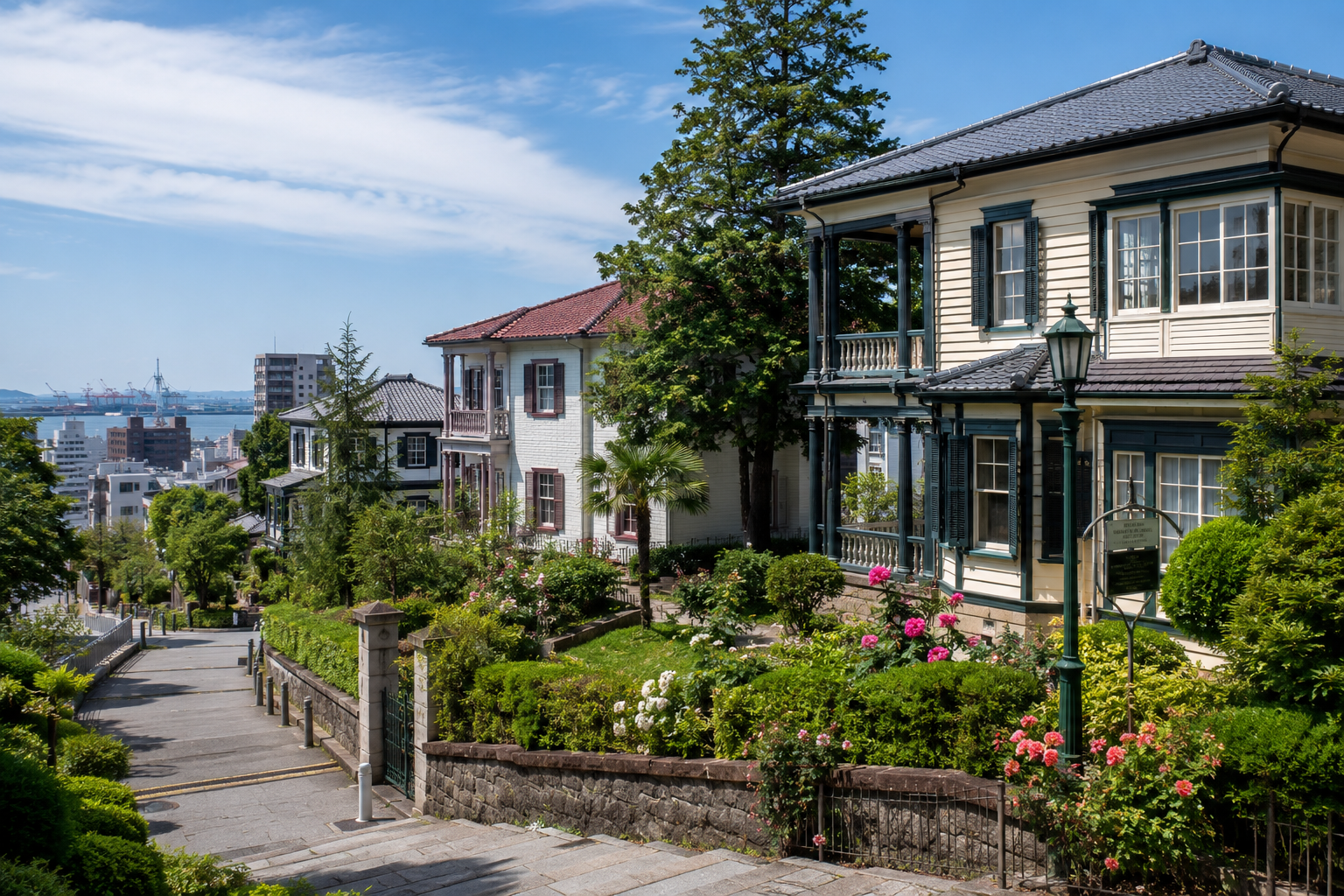
言葉も習慣も違う場所で、自分なりの暮らし方を少しずつ作っていく。英語を学ぶことも、きっと同じです
Yamate Western Houses: Why Are Western-Style Homes Still Standing on Yokohama’s Hills?
The Yamate district of Yokohama is home to several beautiful Western-style houses that still remain today.
As you walk uphill from Motomachi Shopping Street, you’ll find yourself surrounded by elegant Western buildings. For a moment, you may even wonder, “Am I really still in Japan?”
After the Port of Yokohama opened, a foreign settlement was established around the Yamashita-cho area. Later, foreign residents also began building homes on the hills of Yamate.
Overlooking the harbor, Yamate became one of the main residential areas for foreigners and played an important role in the history of Yokohama’s opening to the world.
Nearby, Harbor View Park offers breathtaking views of Yokohama’s skyline, the port, and the wide open sky.
Today, visitors can explore several historic Western houses, including the Diplomat’s House, Berrick Hall, Ehrismann Residence, Yamate No. 234, Yokohama British House, and Yamate No. 111.
Not all of these buildings have stood in the same location since the port first opened. Some were relocated from other sites, while others were built after the Great Kanto Earthquake of 1923.
For example, the Diplomat’s House was originally built in 1910 as the residence of Sadatsuchi Uchida, a diplomat of the Meiji government. It was later donated to the City of Yokohama and relocated to its current site.
Yamate No. 111 was built in 1926 as the home of an American resident named Mr. Luffin.
Stepping inside these houses allows you to imagine everyday life at that time. The windows, fireplaces, dining rooms, furniture, and living spaces all offer a glimpse into how people once lived.
However, there is one thing worth remembering when you visit these Western houses.
They were not simply elegant foreign-style buildings.
They were real homes where people from overseas lived, worked, raised families, and built their daily lives in Yokohama.
Behind the glamorous image of an international port were ordinary people doing their best to live in a country with a different language, different customs, and a completely different culture.
In many foreign households of the time, Japanese servants and gardeners came and went each day. Without a shared language, they likely relied on gestures and a handful of borrowed words to get through daily tasks together. In the kitchen, foreign residents faced unfamiliar ingredients and tools, gradually adapting the tastes of home to fit Japanese life. And in the gardens, alongside lawns and Western flowers, many houses kept their pine trees and stone lanterns just as they were—small traces of Japan that were never entirely replaced.
Living between cultures was not about becoming completely absorbed into one culture or fiercely protecting the other. Instead, I imagine it meant slowly building a way of life that felt right to you, one small daily choice at a time.
It felt so close to the idea at the heart of Edo Shomin, the blog I run, that I found myself thinking, “Wow… this really speaks to me.”
横浜の「異国情緒」とは、文化が混ざり合った歴史の跡
横浜を紹介するとき、私たちはよく「異国情緒」という言葉を使います。
しかし、異国情緒とは、単に外国風の建物が並んでいることだけを意味するのではないと思うんですよね。
開港によって外国人が横浜へやって来ました。 海外から新しい文化や技術が入り、日本からも生糸や茶などが世界へ運ばれました。 日本人と外国人が同じ町で働き、物を売買し、互いの文化を目にするようになりました。
もちろん、すべての交流が順調だったわけではありません。 言葉や価値観の違いによる誤解や衝突もあったはずです。 この江戸庶民ブログの中の人気コーナー「浮世茶屋 小噺」の主人公、文太も、悪戦苦闘していましたね! それでも、当時の日本人たちは異なる文化と出会い、自分たちの暮らしに取り入れ、日本らしい形へと変化させてきました。 外へ追い出さず、受け入れて、馴染ませていく精神、というのでしょうか? こういうところ、日本人の素晴らしいところの一つだと思います。
横浜に残る洋館やガス灯、赤レンガ倉庫は、その交流の中で生まれた街の記憶です。 横浜の異国情緒は、外国文化だけで作られたものではありません。 日本文化と外国文化が出会い、混ざり合い、長い時間をかけて育てられてきたものなのです。
Yokohama’s International Atmosphere: A Legacy of Cultures Coming Together
When people talk about Yokohama, they often describe it as having an “international atmosphere.”
But I don’t think that simply means there are Western-style buildings everywhere.
When the port opened, people from overseas came to Yokohama. New ideas, technologies, and cultures entered Japan, while Japanese products such as raw silk and tea were exported to the rest of the world.
Japanese and foreign residents lived in the same town, worked together, traded with one another, and experienced each other’s cultures firsthand.
Of course, not every encounter was smooth. Differences in language and values must have caused misunderstandings and conflicts from time to time. Even Bunta, the main character in the popular Ukiyo Chaya Stories series on this blog, had plenty of struggles!
Even so, the people of Japan gradually accepted these new influences, adapted them to their own way of life, and transformed them into something uniquely Japanese.
Rather than rejecting what was different, they found ways to embrace it and make it part of their everyday lives.
I believe that willingness to accept new ideas while preserving one’s own culture is one of the wonderful qualities of the Japanese people.
The Western-style houses, gas lamps, and Red Brick Warehouse that still stand in Yokohama today are lasting reminders of those cultural exchanges.
Yokohama’s international atmosphere was not created by foreign culture alone.
It was shaped over many years as Japanese and foreign cultures met, influenced one another, and gradually grew together.
Perhaps that is what makes Yokohama such a fascinating city even today.
こんな時は英語で?|横浜の「異国情緒」をどう説明する?
日本語では?
横浜には、日本の伝統と外国文化が混ざり合った独特の雰囲気があります。
英語で伝えるなら
Yokohama has a unique atmosphere shaped by a mixture of Japanese traditions and foreign influences.
英語講師のひと言
「異国情緒」を辞書で調べると、exotic atmosphereという表現が出てくることがあります。 間違いではありませんが、exoticは「自分たちとは異なる、遠い国の珍しいもの」という視点を含む場合があります。 横浜についてもう少し具体的に説明するなら、a mixture of Japanese traditions and foreign influences(日本の伝統と外国文化の影響が混ざり合ったもの)と表現する方が、横浜の歴史的背景まで伝わります。
be shaped by 〜は「〜によって形作られる」という意味です。 建物の形だけではなく、町の雰囲気や文化、考え方が長い時間をかけて作られたことを表せます。
Yokohama’s culture was shaped by international trade.
(横浜の文化は国際貿易によって形作られました。)
横浜の歴史を感じながら、街を歩いてみよう
横浜には、遊園地やショッピング施設、レストランなど、現代的な楽しみ方もたくさんあります。 横浜に住み始めて2年ほど経ちますが、まだまだ行ったことがないところがいっぱいです。
現代的な景色に大きく変わってしまったけれど、少し視点を変えて歩くと、街の中に残された歴史の層が見えてきます。 横浜開港資料館で開港の背景を知り、港周辺を歩いて赤レンガ倉庫へ。 さらに馬車道のガス灯や歴史的な建物を眺め、時間があれば山手の西洋館まで足を延ばしてみる。
同じ横浜の街並みでも、歴史を知る前と知った後では、見えるものが変わるかもしれません。 いや、変わること間違いなしと思います!
「有名だから見る」のではなく、
なぜこの建物はここにあるのだろう?
なぜ横浜には西洋文化が今も色濃く残っているのだろう?
と問いながら歩くことで、観光は歴史を体験する時間になります。
横浜の「なぜ?」探しは、私にとってもまだまだ始まったばかりです。 もしよかったら、皆さんが街歩きの中で見つけた横浜の「なぜ?」も、いつか教えてくださいね。
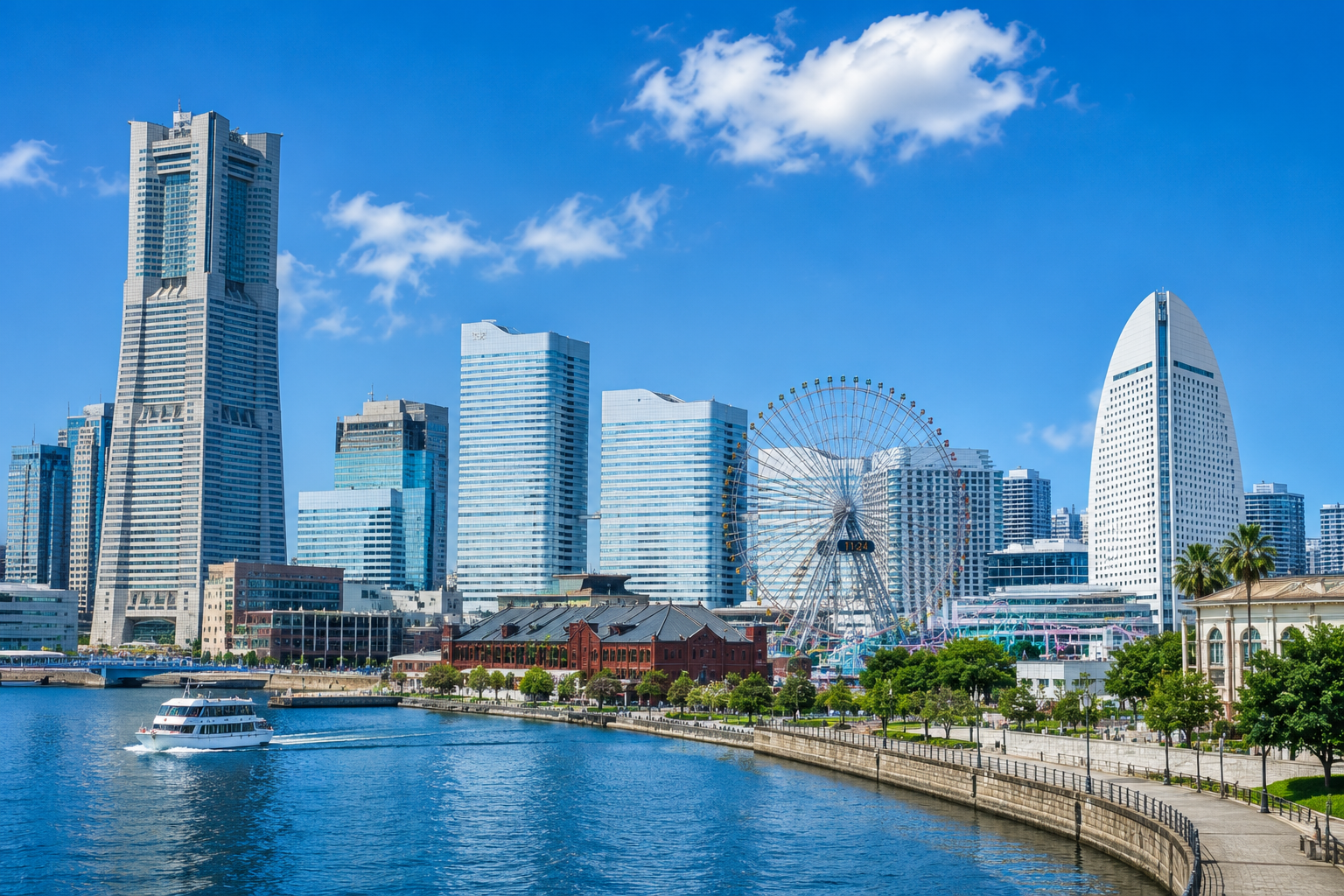
Walk Through Yokohama with Its History in Mind
Yokohama offers plenty of modern attractions, including amusement parks, shopping complexes, and excellent restaurants.
I’ve been living in Yokohama for about two years now, and there are still so many places I haven’t had the chance to visit.
Although much of the city has been transformed into the modern skyline we see today, looking at it from a different perspective reveals the many layers of history that still remain.
Start by learning about the opening of the port at the Yokohama Archives of History, then take a walk around the waterfront to the Red Brick Warehouse. Continue through Bashamichi, where historic gas lamps and beautiful old buildings still stand, and if you have time, make your way up to the Western-style houses in Yamate.
You may find that the same streets of Yokohama look completely different after you understand the history behind them.
Actually, I’m convinced they will!
Instead of simply visiting famous landmarks, try asking yourself:
- Why was this building built here?
- Why does Western culture still have such a strong presence in Yokohama today?
When you explore the city with these questions in mind, sightseeing becomes much more than taking photos—it becomes a chance to experience history.
I still haven’t made it to Harbor View Park myself, and I haven’t taken the time to properly explore the Diplomat’s House either. My own search for Yokohama’s “whys” is really just getting started. If you ever find a “why” of your own while wandering these streets, I’d love to hear about it.
まとめ|横浜の異国情緒は、日本と世界が出会った歴史から生まれた
横浜が異国情緒のある街になった大きなきっかけは、1859年の開港でした。 日本がかつてないほど大きく変化した時代です。
開港前には港の施設もほとんどない小さな村だった横浜に、外国人居留地や貿易施設が整えられ、多くの人や物、文化が行き交うようになり、馬車道には新しい技術や文化が入り、赤レンガ倉庫は国際貿易を支え、山手には外国人たちの暮らしを伝える西洋館が残されました。 なんとなく知ってはいたものの、今回しっかり横浜について調べてみると、横浜、って場所がますます面白く、ワクワク感じました。
冒頭でお話しした「横浜開港記念日が自分の誕生日だった」というちょっとした偶然も、調べれば調べるほど、単なる偶然以上のものに思えてきました。 横浜という街が積み重ねてきた「出会い」と「変化」の歴史に、自分もほんの少しだけ仲間入りできたような、そんな気分です。
横浜を訪れたら、ぜひ美しい景色だけではなく、その場所に残された「なぜ?」にも目を向けてみてくださいね!
そして、外国人の友人に横浜について尋ねられたら、今回紹介した英語を使って伝えてみてください。
Yokohama is more than just a beautiful port city. Its unique culture was shaped by the long history of exchange between Japan and the rest of the world.
横浜は、ただ美しい港町というだけではありません。その独特な文化は、日本と世界との長い交流の歴史によって形作られてきたのです。
Conclusion: Yokohama’s International Atmosphere Was Born from Japan’s Encounter with the World
The major turning point that gave Yokohama its distinctive international atmosphere was the opening of the port in 1859.
It was a time when Japan was undergoing changes on a scale never seen before.
Before the port opened, Yokohama was only a small village with almost no port facilities. Afterward, foreign settlements and trading facilities were developed, and people, goods, and cultures began to move through the city.
New technologies and Western culture arrived in Bashamichi, the Red Brick Warehouse supported international trade, and the Western-style houses in Yamate preserved traces of the lives of foreign residents.
I had always known a little about Yokohama’s history, but researching it more deeply for this article made the city feel even more fascinating and exciting to me.
That small coincidence I mentioned earlier—discovering that Yokohama Port Opening Memorial Day falls on my own birthday—started to feel like more than just a coincidence the more I learned. In a small way, it felt like I had become part of Yokohama’s own long story of encounters and change.
When you visit Yokohama, don’t just admire the beautiful scenery. Take a moment to look for the “why” behind each place as well.
And when a foreign friend asks you about Yokohama, try using some of the English expressions introduced in this article to explain its history.
Yokohama is more than just a beautiful port city. Its unique culture was shaped by the long history of exchange between Japan and the rest of the world.
横浜への旅を計画するなら、こちらもあわせてご覧ください
横浜のホテルを探す(楽天トラベル)Rakuten Travel
「日本文化を英語で語る」シリーズの他の記事も、ぜひお楽しみください。地べた文化、お出汁、タトゥー温泉、花見——日本の日常に息づく文化を、英語学習者の方にも届くように書いています。
Be sure to explore the other articles in our “Talking About Japanese Culture in English” series as well. From sitting on the floor, dashi, tattoos and hot springs, to cherry blossom viewing, each article explores a unique aspect of everyday Japanese culture. They’re written to help English learners discover Japan while learning how to talk about its culture in English.
最後まで読んでいただき、ありがとうございました!
Thank you for reading!