※本記事にはプロモーションが含まれています。
こんにちは!この記事は、英会話講師歴20年、オンライン英会話スクール「Coogee English Online」の運営者が解説しています
海外の友達が我が家にやって来ると、よく聞かれる質問があります。
それは、「どうして、日本人は地べたに座るの?」ということです。
日本人が床に座ることを「地べたに座る」と感じ、それを外国人はとても驚きます。
考えてみれば、多くの国では、家の中でも椅子やソファに座るのが当たり前です。 食事も椅子、勉強も椅子、くつろぐ時も椅子、もしくは、ソファ。
けれど日本では、今でも床に座る生活が残っています。 畳の上に座り、布団を敷いて寝て、ちゃぶ台でご飯を食べる。 海外の人から見ると、この「床で暮らす文化」はとても不思議に見えるようです。
この記事では、日本に昔から続く床文化について、江戸時代の暮らしや海外の生活との違いも交えながら紹介していきます。 英語訳も付けてあるので、学習のお供に、ぜひご活用ください!
English Script
When people from other countries visit a Japanese home, they are often surprised by one thing.
They ask, “Why do people sit on the floor?”
In many countries, people usually sit on chairs or sofas, even inside the house.
People eat on chairs, study on chairs, and relax on chairs.
But in Japan, the lifestyle of sitting on the floor still remains.
People sit on tatami mats, sleep on futons, and eat at a low table called a chabudai.
For many people from overseas, this “floor lifestyle” looks very unusual.
Some people from overseas even feel it looks like sitting directly on the ground.
In this article, we will introduce Japan’s traditional floor culture.
We will also look at daily life in the Edo period and the differences between Japan and other countries.
外国人はなぜ「地べたに座る」と感じるのか?
多くの国では、家の中でも椅子やソファに座るのが当たり前で、床に直接座る習慣はあまりありません。
そのため、日本人が畳や床にそのまま座る様子が、外国人には「地べたに座っている」ように見えて、不思議に感じられることがあります。
けれど日本では、畳の文化、布団で寝る文化、ちゃぶ台を囲む暮らしが長く続いてきました。 つまり、日本人にとって床は、ただの「地べた」ではなく、暮らしの中心だったのです。
English Script
In many countries, people usually sit on chairs or sofas, even at home, and it is not common to sit directly on the floor.
That is why, when people from overseas see Japanese people sitting directly on tatami mats or the floor, it may look like they are “sitting on the ground,” which can feel unusual to them.
However, in Japan, the culture of tatami, sleeping on futons, and gathering around a low table has continued for a long time. In other words, for Japanese people, the floor is not simply “the ground,” but an important part of daily life.
日本では床で暮らす文化が続いてきた
日本では、昔から床に座る生活が続いてきました。
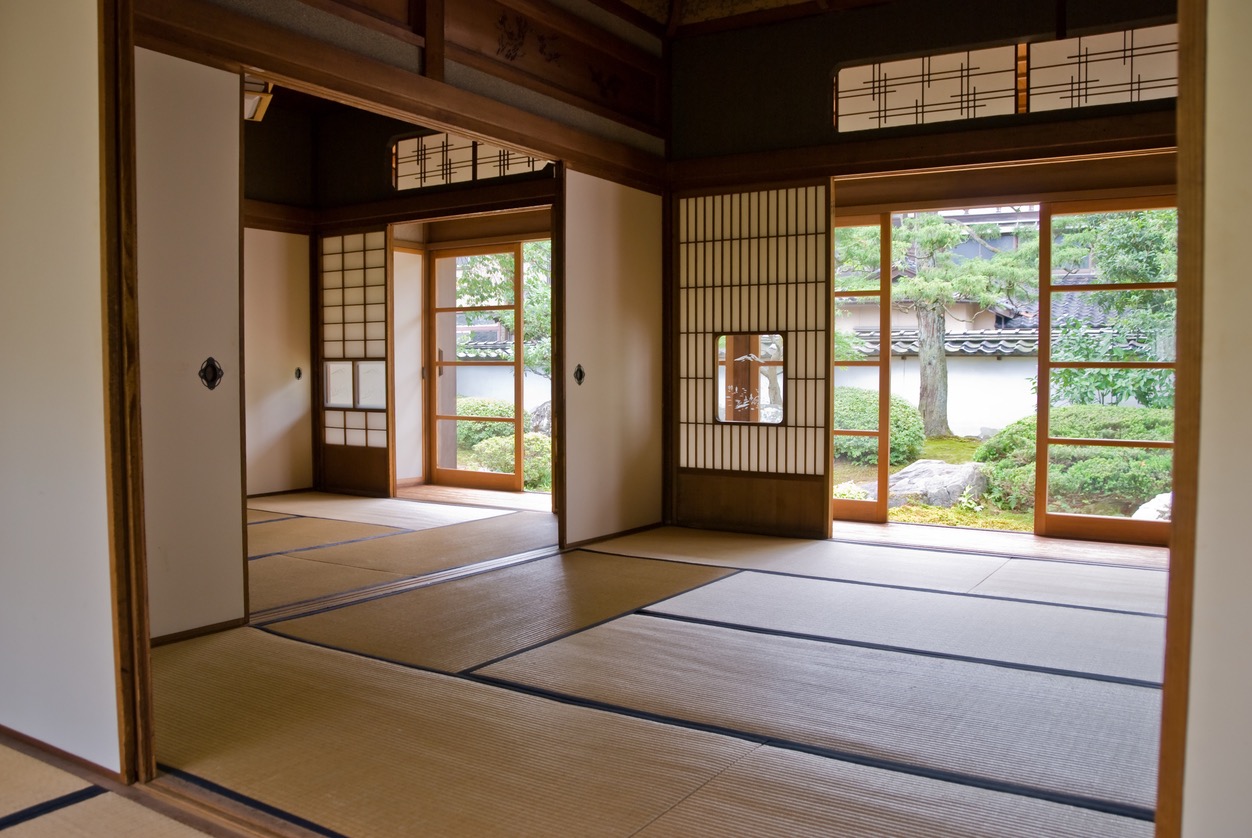
その理由のひとつが、畳(たたみ)です。
畳は柔らかく、断熱性もあり、直接座っても体が痛くなりにくい作りになっています。
椅子を使わなくても快適に過ごせるため、日本では自然と床に座る生活が定着していきました。 また、日本では布団を敷いて寝る文化があります。 昼は床にちゃぶ台を置いて食事をし、夜になると布団を敷いて眠る。 同じ部屋でも、時間によって使い方を変える、という暮らし方です。
このような生活は、日本の住まいの形と、とても相性が良かったのです。 こうした暮らしの中で感じられる、畳のやさしい香りも、私はとても好きです。
English Script
In Japan, people have sat on the floor for a very long time.
One reason is tatami mats.
Tatami mats are soft and have good insulation.
Because of this, people can sit on them without feeling much pain.
Since people could live comfortably without chairs, the floor-sitting lifestyle naturally became common in Japan.
There is also the culture of sleeping on futons.
During the day, people place a low table called a chabudai on the floor and eat their meals.
At night, they put away the table and lay out futons to sleep.
This kind of lifestyle fits very well with the design of Japanese homes.
In this kind of living environment, I also really like the gentle scent of tatami.
江戸時代の人々の暮らし
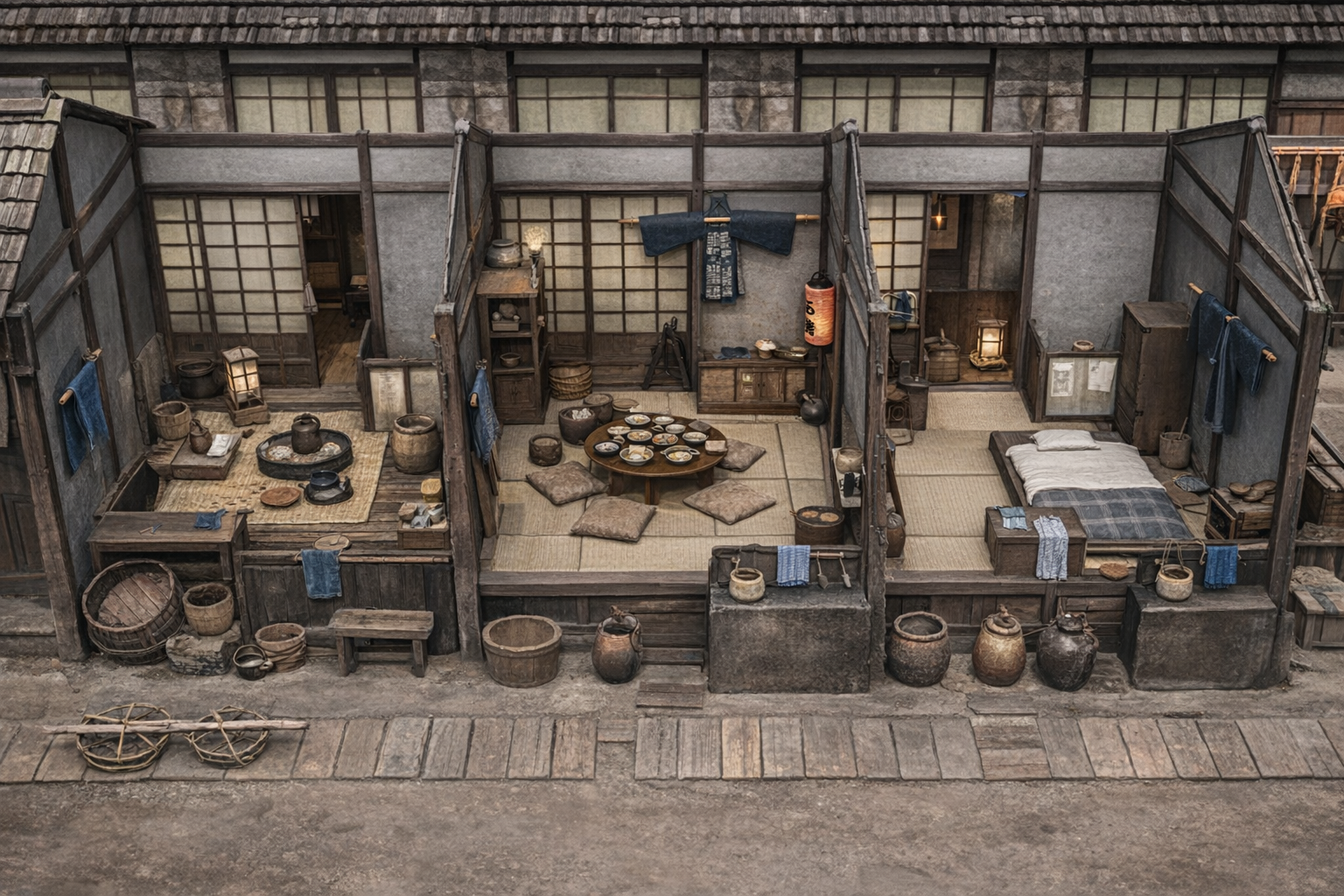
この床文化は、江戸時代の暮らしにも深く関係しています。
江戸の庶民が暮らしていた長屋(ながや)では、今のような大きな家具はほとんどありませんでした。
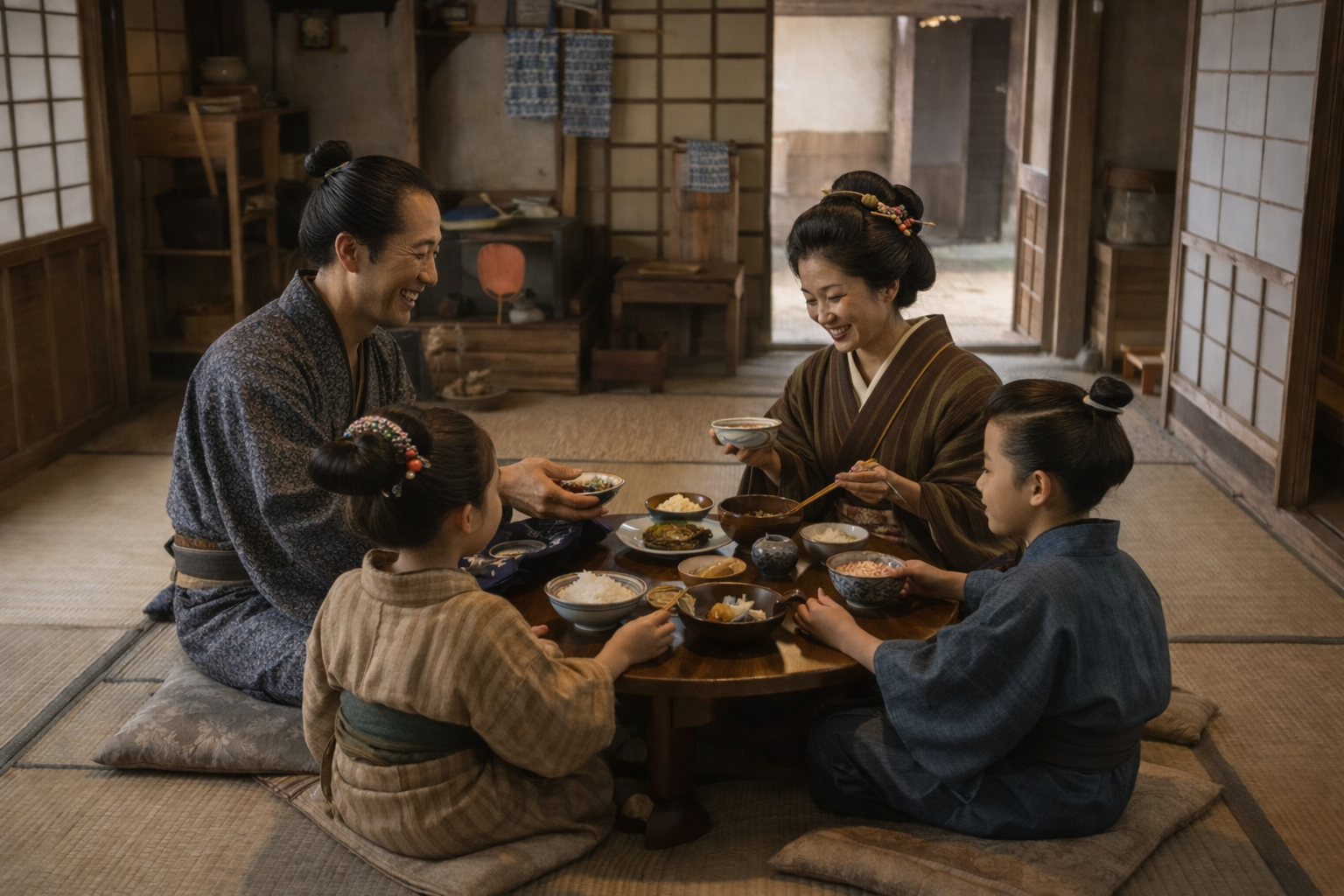
食事のときにはちゃぶ台やお膳(ぜん)を使い、床に座って食べます。
食事が終われば、それらを片付けて部屋を広く使うことができました。
家具をたくさん置くよりも、部屋を広く使えることの方が大切だったのです。
椅子や大きな家具が中心の生活とは少し違い、日本の家では、床そのものが暮らしの中心になっていたとも言えるのかもしれません。
English Script
This floor culture is also closely connected to life in the Edo period.
In nagaya, the row houses where common people lived, there were very few large pieces of furniture like we have today.
When it was time to eat, people used a low table called a chabudai or a small tray table called a zen, and they sat on the floor.
After the meal, they put these things away and could use the room as a wide open space again.
For people in the Edo period, it was more important to keep the room open and flexible than to fill it with a lot of furniture.
Life in Japan was a little different from countries where chairs and large furniture are common.
In Japanese homes, the floor itself was often the center of daily life.
People ate on the floor, relaxed on the floor, and slept on the floor.
In many ways, the floor was an important part of everyday living.
海外の椅子文化との違い
一方、海外では椅子を使う生活が基本です。
ヨーロッパの家では、ダイニングテーブルやソファなど、大きな家具を置くことが前提の間取りになっています。 つまり、日本と海外では家の作りそのものが違うのです。
海外では椅子やソファに座る生活。
日本では床、つまり、地べたに座る生活。
どちらが正しいというわけではなく、文化や住まいの形が違うだけなのです。
English Script
On the other hand, in many countries overseas, people usually live with chairs.
In many European homes, the layout of the house is designed for large furniture such as dining tables and sofas.
In other words, the structure of homes in Japan and overseas is different.
In many countries, people sit on chairs.
In Japan, people often sit on the floor.
Neither way is right or wrong.
They are simply different lifestyles shaped by culture and the design of homes.
正座と外国人のリアクション
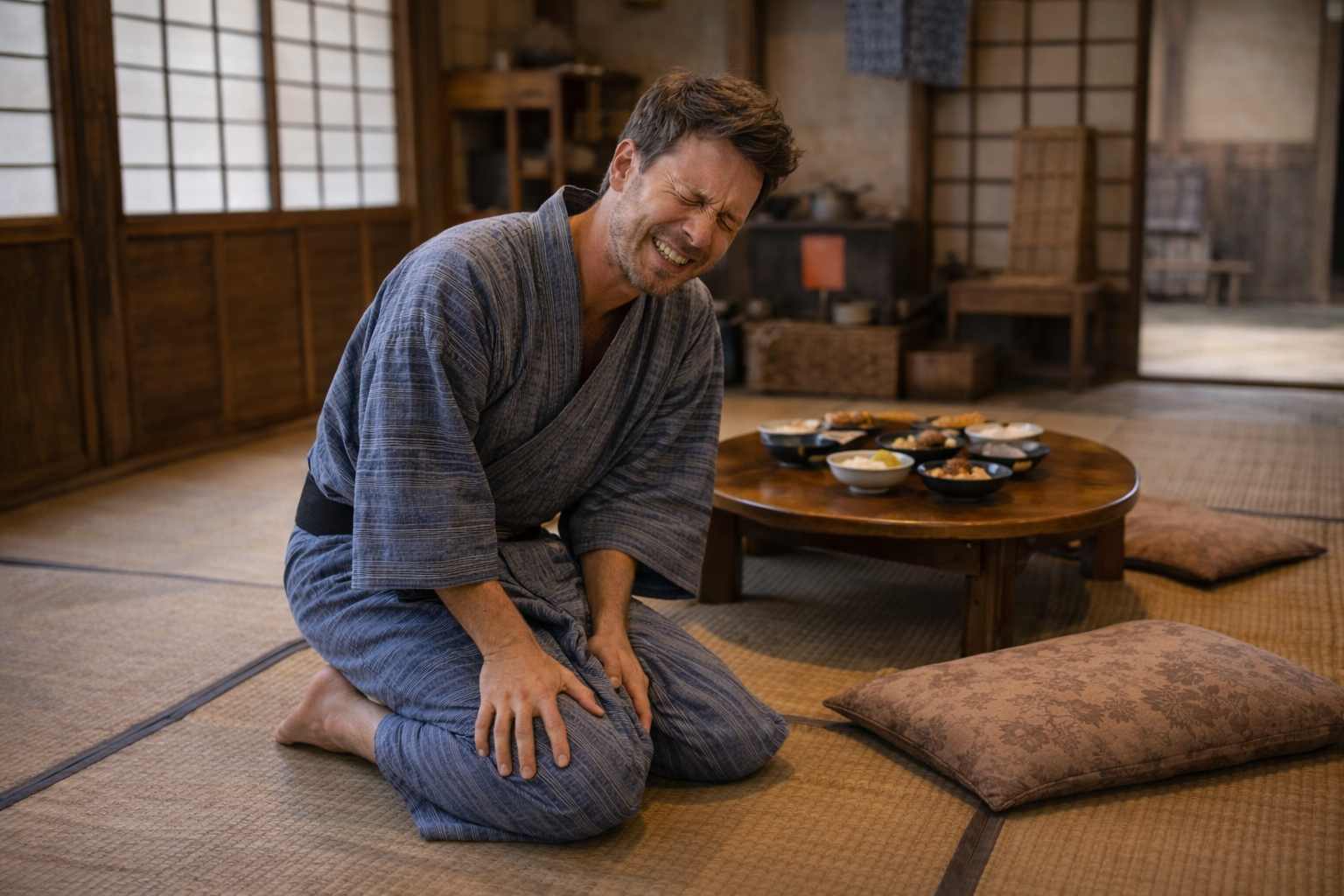
日本の床文化を体験した外国人が、よく苦戦するのが正座です。
正座をすると、数分後にはこんな言葉を言う人がとても多いです。
Oh…my legs fell asleep.
とても面白い表現ですね!
これは直訳すると「私の足が眠ってしまった」という意味ですが、英語では「足がしびれた」という意味で使われます。 正座に慣れていない外国人にとっては、なかなか大変な体験のようです。 私はこの英語を初めて聞いた時、可笑しくて吹き出しちゃいましたよ。 足が眠っちゃった、というよりも、どちらかというと、痛くて飛び起きますよね?
このように、日本文化を英語で説明したり、英語で表現を学んだりすることは、英語学習にもとても役立ちます。
English Script
When people from overseas experience Japan’s floor culture, one thing they often struggle with is seiza.
After sitting in seiza for a few minutes, many people say something like this:
“Oh… my legs fell asleep.”
If we translate this directly, it sounds like “my legs went to sleep.”
But in English, this expression means that your legs have become numb.
For people who are not used to sitting in seiza, it can be quite a difficult experience.
When I first heard this expression, it made me laugh.
“Your legs fell asleep”?
To be honest, it doesn’t feel like your legs are sleeping.
Sometimes it feels more like they hurt so much that you want to jump up right away!
「足が眠っちゃった」——英語には、その人の暮らしや感じ方が、そのまま出ますね!
犬2匹との床生活
床に座る生活には、もう一つ面白い特徴があります。 それは、人との距離が自然と近くなることです。
椅子やテーブルを挟む生活と違い、床に座ると同じ高さで空間を共有することになります。
ちゃぶ台を囲んで座ると、自然と体の距離が近くなり、会話もどこかゆったりと流れます。
私自身も、床で過ごす時間がとても好きです。
私は犬を2匹飼っているのですが、冬になると、寒いからでしょうね、彼らは必ず私のいるところへ集まってきて、すぐ近くで眠ります。 そして私も、そんな2匹のそばで床にごろ〜んと寝転がります。
冬の時期、我が家の床はポカポカです。 ラグを敷いて、その上に毛布を置いておくと、簡易的なこたつのようになります。 この温かい床に寝転がる時間が、本当に気持ちよくて、ついそのまま動けなくなってしまいます。
友達が遊びに来たときも、床に座っておしゃべりをしていると、どこか距離が近く感じられます。
眠くなったら、そのまま床にごろ〜んと横になることもできます。
椅子の生活とは少し違って、床に座る暮らしには、人と人との距離や、ペットとの距離を自然と近づけてくれるような温かさがあるのかもしれません。
English Script
There is another interesting feature of living on the floor.
It naturally brings people closer together.
Unlike a lifestyle with chairs and tables, when people sit on the floor, they share the same level in the same space.
When people sit around a chabudai, their bodies naturally become closer, and conversations seem to flow more slowly and peacefully.
I personally love spending time on the floor.
I have two dogs, and in winter they always come to where I am.
Maybe it is because it is cold, but they gather near me and soon fall asleep beside me.
Then I lie down on the floor near them.
During winter, the floor in my home becomes very warm.
If I put a rug on the floor and place a blanket on top, it becomes something like a simple kotatsu.
Do you know what a kotatsu is?
Once you try it in winter, you won’t want to get out. I’m serious.
Lying on this warm floor feels so comfortable that sometimes I cannot move for a while.
When friends come to visit, we often sit on the floor and talk together.
Somehow the distance between us feels closer.
If someone gets sleepy, they can simply lie down on the floor.
Living with chairs is a little different.
A floor-sitting lifestyle may have a gentle warmth that naturally brings people and pets closer together.
日本の家は家具を多く置かない
日本の家では、大きな家具をたくさん置かないことが多いです。
その理由のひとつが、部屋を柔軟に使う文化です。
昼は居間として使い、夜はそこに布団を敷いて寝室になります。
このように、一つの部屋をさまざまな用途で使うため、日本では家具を少なくする暮らしが生まれました。
海外では事情が少し違います。
石や木の硬い床が多く、靴を履いたまま家の中に入る文化もあります。 そのため、床に直接座る習慣はあまりありません。 代わりに、椅子やソファ、ベッドといった家具を中心に生活が作られています。
この違いが、日本の床文化を外国人にとって少し不思議なものに見せているのかもしれません。
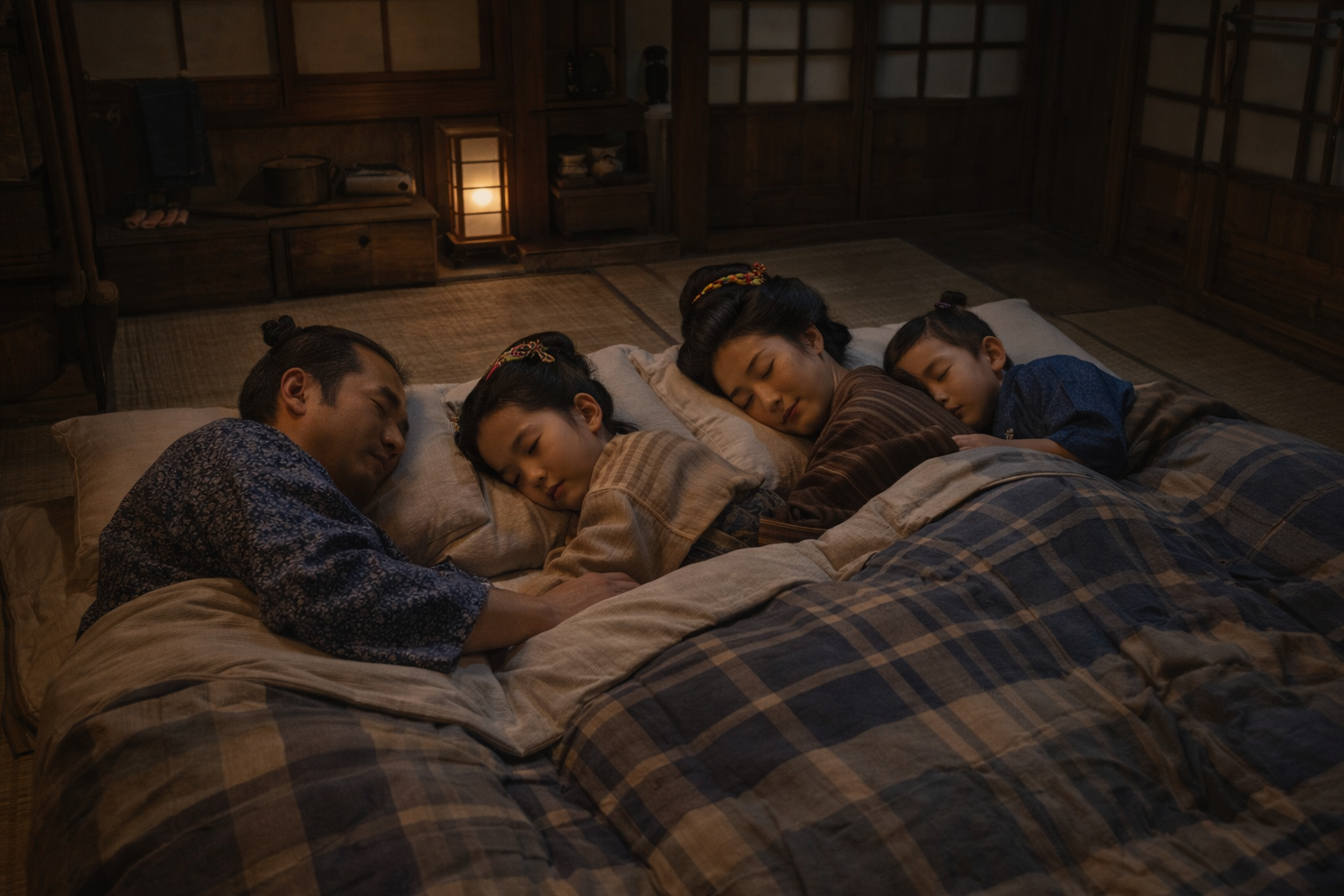
English Script
In many Japanese homes, people do not place a lot of large furniture in their rooms.
One reason for this is the culture of using a room in flexible ways.
During the day, the room may be used as a living space.
At night, people lay out futons and use the same room as a bedroom.
Because one room is used for many different purposes, people in Japan developed a lifestyle with fewer pieces of furniture.
In other countries, the situation is a little different.
Many homes have hard floors made of stone or wood.
In some cultures, people also enter the house while still wearing their shoes.
Because of this, it is not common to sit directly on the floor.
Instead, daily life is built around furniture such as chairs, sofas, and beds.
This difference may be one reason why Japan’s floor culture looks a little unusual to people from overseas.
床文化は、人との距離を近づける暮らし
外国の人にとって、日本の床文化は、ずっと座ってると足が眠っちゃうのに、どうして? と、不思議に思うかもしれません。 けれど、日本人にとってはごくごく自然な暮らしでした。
畳の上に座り、ちゃぶ台を囲んで家族と団欒し、夜はちゃぶ台をどけて同じ部屋に布団を敷いてみんなで眠る。
江戸時代の長屋でも現代の日本の家でも、人が床に集まることで自然と会話が生まれ、人との距離が近くなります。 私も犬たちと一緒に床に寝転がっていると、「あぁ、日本に生まれてよかったな〜」なんてしみじみ思うこともあります。 眠くなったら床にごろ〜んとできる文化、最高です。
床に座る生活は、少し不便に見えるかもしれません。 けれど、その分、人と人、人とペット
そこに集まる人達との空間の距離を、やさしく近づけてくれる暮らしでもあるのです。
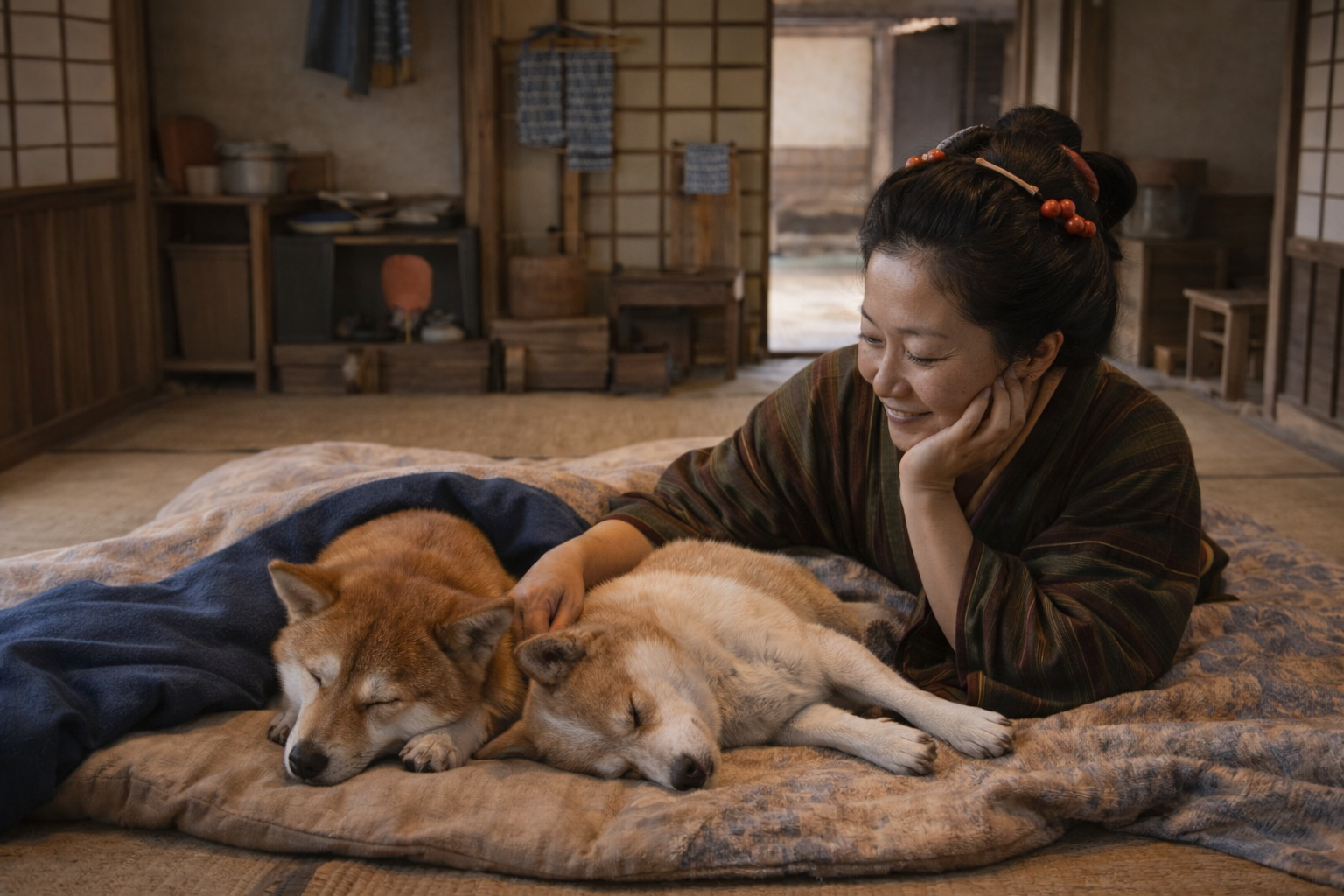
English Script
For many people from overseas, Japan’s floor culture may feel a little strange.
They might wonder, “Why do people sit like this when their legs fall asleep?”
But for Japanese people, this has been a very natural way of living.
People sit on tatami mats, gather around a chabudai with their family, and enjoy time together.
At night, they move the table away and lay out futons in the same room to sleep.
This was true in nagaya of the Edo period, and it is still true in many Japanese homes today.
When people gather on the floor, conversations begin naturally, and people feel closer to each other.
When I lie down on the floor with my dogs beside me, I sometimes think,
“I’m really glad I was born in Japan.”
And if I get sleepy, I can simply lie down on the floor and relax.
For me, this floor-sitting lifestyle is truly wonderful.
A lifestyle of sitting on the floor may look a little inconvenient at first.
However, it also has a gentle way of bringing people closer together.
It brings people closer to each other, and even closer to their pets.
In a quiet and natural way, the floor becomes a place where everyone gathers and shares the same space.
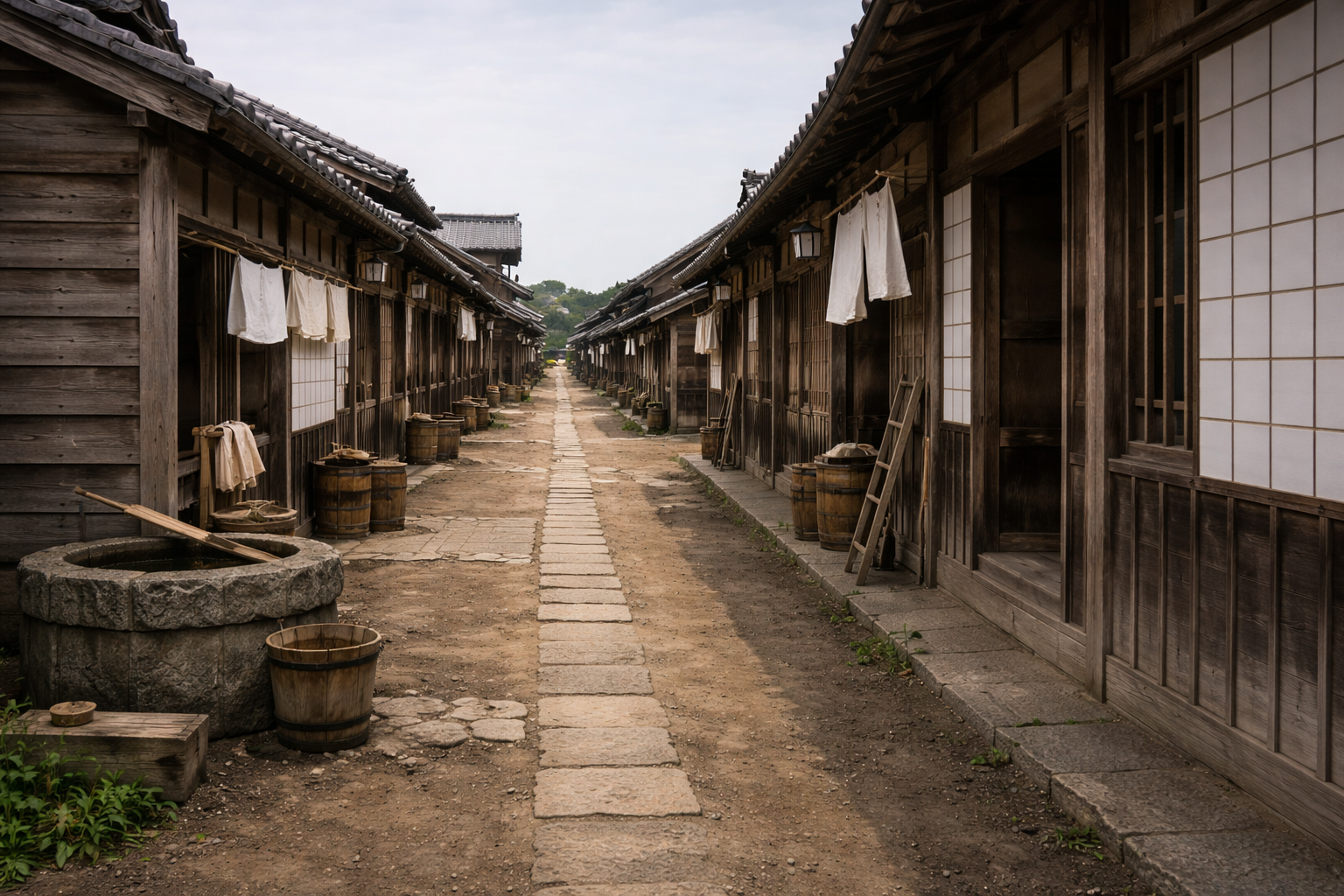
これは、江戸時代の長屋の写真です。当時の人々は、玄関に鍵をかけて出かけるという概念がなく、お隣さんととても強く信頼し合って暮らしていました。 鍵をかけないで出かけるなんて、今ではとても信じられませんよね?
This is an image of a row house, nagaya from the Edo period.
At that time, people did not have the habit of locking their doors when they went out, and they lived with a strong sense of trust with their neighbors.
It’s hard to imagine leaving your house unlocked today, isn’t it?
日本では、床に座る文化だけでなく、「同じ空間を静かに共有する感覚」も大切にされてきました。 そうした空気感は、温泉文化の中にもどこか共通しているように感じます。 タトゥーと温泉の関係や、日本人が温泉で大切にしてきた感覚については、こちらの記事でも詳しく紹介しています。
In Japan, people have long valued not only the custom of sitting on the floor, but also the quiet feeling of sharing the same space with others.
That same atmosphere can also be felt in Japanese hot spring culture.
If you are interested in the relationship between tattoos and Japanese hot springs, as well as the cultural values behind them, please take a look at the article below.
日本の侘び寂びやお花見については、こちらの記事でもお話ししています。 床文化とあわせて、日本人が大切にしてきた美意識や季節の楽しみ方も感じていただけたら嬉しいです。
You may also enjoy these articles about wabi-sabi and hanami, two beautiful parts of Japanese culture.
「日本文化を英語で語る」シリーズの他の記事も、ぜひお楽しみください。お出汁、タトゥー温泉、アニメ、カプセルトイ——日本の日常に息づく文化を、英語学習者の方にも届くように書いています。
Explore more articles about Japanese culture in English.
英語力の目安について知りたい方は、こちらの記事も参考にしてみてください。
英語レベル早見表 | CEFR・TOEIC・英検を比較して英語力の目安を解説
英語が話せるようになるまでの旅 | 英語講師20年が見てきた5つの町
最後まで読んでいただき、ありがとうございました!