※本記事にはプロモーションが含まれています。
こんにちは!この記事は、英会話講師歴20年、オンライン英会話スクール「Coogee English Online」の運営者が解説しています
日本の夏は、とにかく暑い! うだるような強い日差しに、ベタベタとまとわりつく湿気…
夏に日本を訪れた外国人観光客の中には、外へ出た瞬間、思わずこう感じる人もいるかもしれません。
“Why is it so hot and humid in Japan?”
少し歩いただけでも汗が流れ、喉が渇き、エアコンの効いた建物や木陰に入るだけで全身からその籠った熱が放たれていき、思わず「涼しい〜!」と口にしてしまいますね。
そんな過酷な暑さでも、日本の夏には、不思議と人を惹きつける魅力があります。
風鈴の涼やかな音、夕暮れに聞こえる、ヒグラシの声、縁側を吹き抜けるやさしい風、「氷」の旗が揺れる店先や、夜空いっぱいに広がる大輪の花火。
日本人は昔から、夏の暑さをただ「我慢」してきたわけではありません。
暑さをやわらげるための知恵を生み出し、五感で涼しさを味わう風情を育み、そして暑い季節の中にも、人が集まり笑い合う時間をつくってきました。
日本の夏には、知恵があり、風情があります。
そして、笑顔があふれています。
この記事では、江戸時代から続く日本の夏の知恵、五感で涼を感じる風情、そして人々を笑顔にしてきた夏の遊びをたどりながら、日本ならではの夏の楽しみ方を紹介します。 英語バージョンも載せておきますので、日々の英語学習にお役立てください!
Japan in summer is, quite simply, hot.
The blazing sun beats down relentlessly, while the heavy humidity seems to cling to your skin.
Many international visitors arriving in Japan during the summer may find themselves thinking:
“Why is it so hot and humid in Japan?”
After walking for only a few minutes, sweat begins to pour, your throat feels dry, and the moment you step into an air-conditioned building or the shade of a tree, the trapped heat seems to melt away.
Before you know it, you cannot help saying:
“Ah, that feels so refreshing!”
Yet despite the intense heat, there is something undeniably captivating about a Japanese summer.
The gentle chime of wind bells, the evening song of the higurashi cicadas, and the soft breeze drifting through a traditional veranda.
The fluttering kakigōri shaved-ice flags outside small shops, and spectacular fireworks blooming across the night sky.
For generations, the Japanese people have never simply endured the summer heat.
Instead, they have created ingenious ways to stay cool, cultivated traditions that allow people to experience a sense of coolness through all five senses, and found ways to gather, laugh, and celebrate even during the hottest season of the year.
Japanese summer is filled with wisdom.
It is filled with beauty and atmosphere.
And above all, it is filled with smiles.
日本文化を英語で紹介したい方へ
For Those Who Want to Introduce Japanese Culture in English
日本文化を英語で語る|英語学習者のための日本紹介・完全ガイド
The Complete Guide to Talking About Japanese Culture in English
日本の夏は、昔から暑かった?
今の日本では、夏になるとエアコンや扇風機を使わなければ過ごせないくらい暑くなりましたね。
江戸の時代、日本の夏の平均気温は25〜26℃前後だったと言われています。 今と比べたらかなり涼しかったようですが、それでも、今のようにものすごく暑かった日もあったようです。 当然ですが、エアコンも扇風機もなかったので、暑さを乗り切るのが大変だったでしょうね。
そんな夏、当時の彼らは、ただ汗を流しながら暑さに耐えていたわけではありませんでした。
風の通り道をつくるために家の造りを工夫したり、水や植物の力を借りながら、少しでも心地よく暮らそうとしていたのです。 日本の伝統的な家屋では、障子や襖を開けることで、部屋と部屋をつなげられます。 壁で細かく区切るのではなく、季節に応じて空間を変え、家の中に風を通していました。
深い軒は夏の強い日差しを遮り日影を作ってくれます。 縁側という部屋と庭の間にそのようにして涼しい空間をつくってくれていたんですね。
現代のように部屋そのものを冷やすのではなく、自然の動きに合わせて暮らし方を変える。
それが、当時の日本人の夏の過ごし方でした。
Has Summer in Japan Always Been This Hot?
Today, summers in Japan have become so hot that it is difficult to get through the season without using an air conditioner or an electric fan.
During the Edo period, the average summer temperature in Japan is believed to have been around 25–26°C (77–79°F). Compared with today, it was generally much cooler. Even so, historical records suggest that there were still days when the heat was intense.
Of course, there were no air conditioners or electric fans, so coping with the summer heat must have been a real challenge.
Yet people in those days did not simply endure the heat while wiping away their sweat.
They designed their homes to let the breeze flow through and made clever use of water and plants to create a more comfortable living environment.
In traditional Japanese houses, opening the shōji sliding paper doors and fusuma sliding partitions connected one room to another. Instead of dividing the house into many small spaces with fixed walls, people could change the layout according to the season and allow fresh air to circulate throughout the home.
Deep eaves also blocked the strong summer sunlight, creating cool shade. The engawa, a wooden veranda between the house and the garden, became another pleasant place where people could enjoy the breeze.
Rather than cooling the entire room as we do today, people adjusted the way they lived in harmony with nature.
That was the Japanese way of spending the summer in the Edo period.
暑さをやわらげる、日本の夏の知恵
昔の日本人は、ごくごく身近にある水や竹、布などを使いながら、夏の暑さを心地よく乗り切る方法を見つけてきました。 ここからは、現在にも残る日本の夏の知恵を見ていきましょう!
Traditional Japanese Wisdom for Staying Cool
Long ago, the Japanese found ingenious ways to stay comfortable during the hot summer months by making use of everyday materials such as water, bamboo, and cloth.
Many of these traditional ideas have been passed down through generations and are still part of Japanese life today.
Now, let’s take a look at some of the timeless wisdom that has helped people enjoy summer in Japan for centuries.
打ち水|水をまき、道の温度を下げ、そこを通る人達にも涼をお裾分け
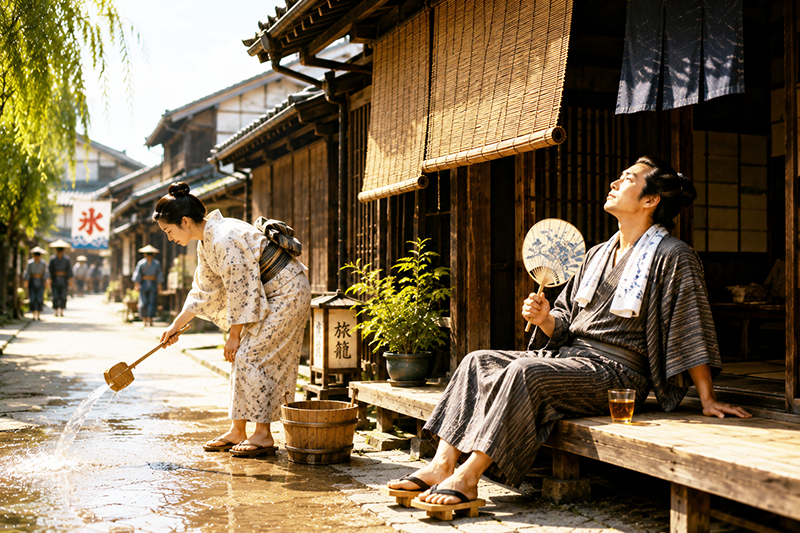
夕方、まだ日差しの熱が残る道に、桶からひしゃくで水をまきます。 じゅ〜っと音を立てて地面が水を勢いよく染み込み、湯気にも似た匂いが立ちのぼる。
それが打ち水です。
まかれた水が蒸発するときに地面の熱を奪うため、周囲の暑さをやわらげる気化熱の効果があります。 また打ち水には、道路のほこりを抑えたり、家の前を清めたりするといった役割もありました。
さらに、自分の家の前だけでなく、道を歩く人にも涼しさを届けることができます。 自分だけが涼むのではなく、周囲の人にも涼を分ける思いやり。 打ち水には、日本人の暮らしに根付いた心遣いも表れています。
Uchimizu | Cooling the Streets, Refreshing Everyone
In the late afternoon, when the day’s heat still lingers on the streets, people sprinkle water from a bucket using a ladle.
The water quickly soaks into the warm ground with a gentle hiss, and a faint scent, almost like rising steam, fills the air.
This traditional practice is called uchimizu.
As the water evaporates, it absorbs heat from the ground. This natural process, known as evaporative cooling, helps lower the surrounding temperature and brings a refreshing feeling to the air.
Uchimizu also helped keep dust from rising on the roads and was a way of cleaning the area in front of one’s home.
More importantly, it was not only for the people living there. The cooler air also brought comfort to anyone passing by.
Rather than keeping the coolness to themselves, people shared it with others.
In this simple act of sprinkling water, we can see the thoughtfulness and consideration for others that have long been a part of everyday life in Japan.
すだれ|日差しは遮り、風は通す。 まるで木陰にいるような涼しさ

すだれは、細い竹や葦などを編んで作られた道具です。 窓や軒先に掛けることで、夏の強い日差しを遮りながら、風を通してくれます。 厚い壁やカーテンで、光も風も完全に閉ざすのではありません。 必要なものだけをやわらかく遮り、すだれ越しに揺れる光や影も楽しむことができます。
そこには、自然を遠ざけるのではなく、うまく付き合おうとする日本人らしい自然との調和の感覚が宿っています。
Sudare | Keeping Out the Sun, Letting in the Breeze
Sudare are traditional screens made by weaving together thin strips of bamboo or reeds.
Hung outside windows or under the eaves, they block the strong summer sunlight while still allowing cool breezes to pass through.
Unlike thick walls or heavy curtains that shut out both light and air, sudare gently filter only what is necessary.
They also create beautiful patterns of light and shadow that sway softly in the breeze.
This reflects a distinctly Japanese way of thinking: rather than shutting nature out, people have long sought to live in harmony with it.
うちわと扇子|自分の手で、やさしく風を起こす
団扇(うちわ)や扇子も、日本の夏を象徴する道具ですね。 今では、マイ扇子、マイうちわをお持ちの方も多いかと思います。
扇風機ほど強い風は生まれませんが、それでも、汗をかいた肌に届くやさしい風には、言葉では言い表せられない心地よさがあります。 泣いている赤ちゃんも、お母さんがやさしく仰いでくれるうちわの風があると、スヤスヤと気持ちよさそうに眠ってしまいますもんね。 うちの犬達も、寝ているところにうちわでそっと仰いであげると、うっとり気持ちよさそうな顔をしますよ。
祭りの会場でうちわを仰いだり、浴衣姿で扇子を広げたりする光景は、今も日本の夏に残っています。
Uchiwa & Sensu | Creating a Gentle Breeze with Your Own Hands
Uchiwa (traditional flat fans) and sensu (folding fans) are also iconic symbols of the Japanese summer.
Even today, many people have their own favorite fan that they carry during the hot season.
They do not create a strong breeze like an electric fan, but the gentle wind they produce against warm, sweaty skin brings a sense of comfort that is difficult to put into words.
That soft breeze has a calming effect on both people and animals alike. A gently waved uchiwa can soothe a crying baby to sleep, and even pets often seem to relax and enjoy its cooling touch.
Even today, scenes of people fanning themselves at summer festivals or gracefully opening a sensu while wearing a yukata remain an unforgettable part of the Japanese summer.
手ぬぐい|一枚の布に詰まった暮らしの工夫
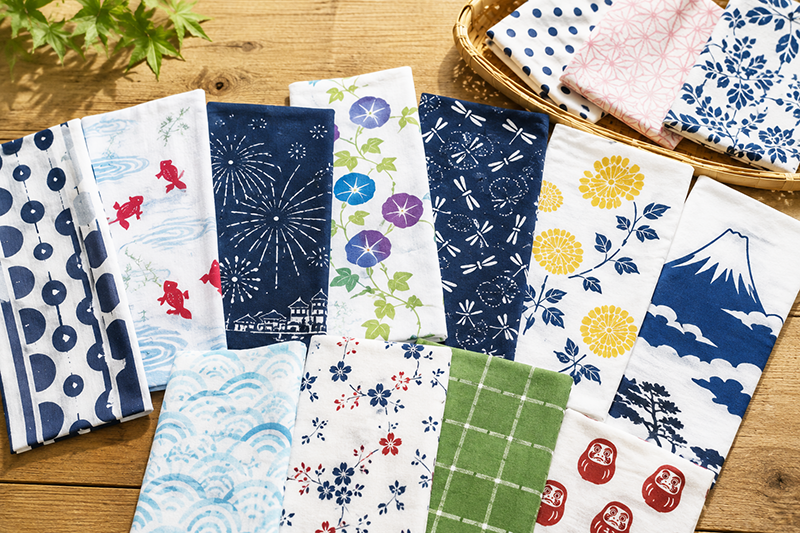
手ぬぐいは、薄い木綿で作られた細長い布です。 汗を拭くほか、水で濡らして首に巻いたり、頭にかぶったり、荷物を包んだりと、さまざまな用途に使われてきました。
そしてなんと言っても一番の特徴が、薄くて乾きやすく、持ち運びやすい!
季節の草花や動物、縁起物などが描かれたものも多く、実用品でありながら、暮らしを楽しむ道具でもあります。 私はこの手拭いの良さを友達から教えてもらい、それ以来、どこかへ出かけた時は旅の記念に手拭いを買うことが多くなりました。 台所のタオルとしても、とても重宝します。 とにかく「便利な布」なので、お土産にも喜ばれるかと思います。
Tenugui | Everyday Wisdom Woven into a Single Piece of Cloth
A tenugui is a long, thin piece of cotton cloth that has been used in Japan for centuries.
Besides wiping away sweat, it can be soaked in water and wrapped around the neck to keep cool, worn on the head for protection from the sun, or used to wrap and carry small items. Its versatility is one of its greatest strengths.
What makes a tenugui especially appealing is that it is lightweight, dries quickly, and is easy to carry wherever you go.
Many tenugui feature beautiful designs inspired by seasonal flowers, animals, or traditional lucky symbols. They are practical everyday items, but they also add a touch of beauty and enjoyment to daily life.
I first discovered the charm of tenugui through a friend. Since then, whenever I travel somewhere in Japan, I often buy one as a souvenir to remember the trip.
I also use them as kitchen towels, and they are surprisingly practical.
Because they are such versatile and useful cloths, tenugui also make wonderful souvenirs for anyone interested in Japanese culture.
蚊帳|夏の夜をやさしく包む
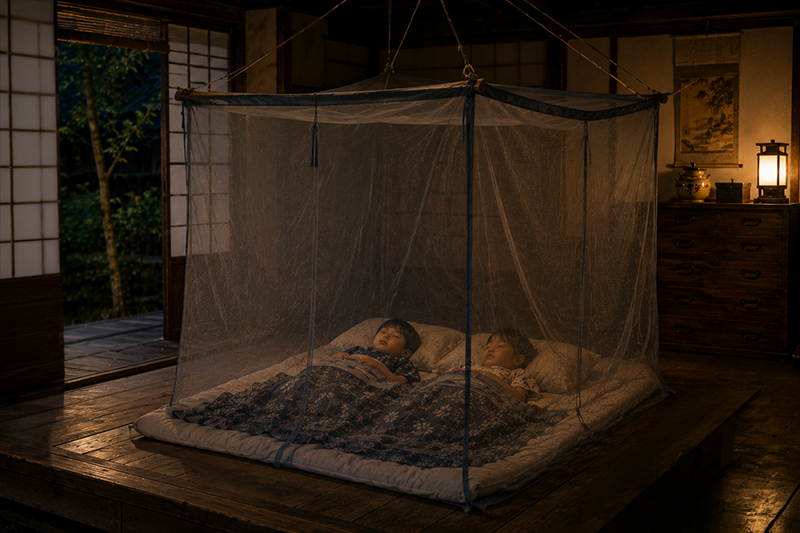
夏の夜に人々を悩ませてきたものの一つが、蚊です。 昔の人々は、寝床の周囲を細かな網で囲う蚊帳を使って眠りました。
今は網戸があるので、部屋に蚊や他の虫の侵入を防ぐことができますが、少しでも風を多く取り入れようと、昔の人たちは戸を開け放って眠っていたんですね。 なので、もし蚊帳がなければ、蚊に刺されまくってねむれなかったでしょう…想像しただけでも痒くなってくる!
そんな蚊帳の中に入ると、薄い網越しに外の空気や音を感じながらも、どこか守られているような安心感があります。 網の向こうに揺れる灯りや、家族が眠りにつく気配。 蚊帳は、虫を防ぐだけの道具ではなく、家族を同じ夜の中でそっとつなぐ、小さな部屋のようなものでもありました。
Kaya | Gently Embracing Summer Nights
One of the greatest nuisances on summer nights has always been mosquitoes.
Long ago, people in Japan slept inside a kaya, a traditional mosquito net made of fine mesh that surrounded their bedding.
Today, most homes have window screens that keep mosquitoes and other insects outside. In the past, however, people often slept with their doors and windows wide open to let in as much cool air as possible.
Without a kaya, they would probably have been covered in mosquito bites and unable to sleep. Just imagining it is enough to make you feel itchy!
Stepping inside a kaya brings a unique feeling of comfort. Through the thin net, you can still sense the night breeze and hear the sounds outside, yet at the same time, you feel gently protected.
The soft glow of a lamp beyond the net and the quiet feeling of family members drifting off to sleep create a peaceful atmosphere.
A kaya was more than just a way to keep mosquitoes away. It was like a small room that quietly brought the family together, sharing the same summer night in comfort and safety.
日本人は、さまざまな「感覚」で涼しさを感じてきた
気温が下がらなくても、音や色、香り、肌触りによって、私たちは涼しさを感じることがあります。 日本人は、実際の温度だけではなく、夏の涼を独特な「感覚」で味わってきました。
The Many Ways the Japanese Have Found Coolness
Even when the temperature doesn’t actually drop, sounds, colors, scents, and textures can make us feel cooler.
For centuries, the Japanese have appreciated the feeling of summer coolness not only through the actual temperature, but also through the unique way it is experienced by the senses.
風鈴|目に見えない風を、音に変える
風鈴は、風が吹くと澄んだ音を響かせます。 風そのものは、目には見えませんが、風鈴が鳴ることで、「今、風が吹いた」と気づくことができます。 ほんの少しの風でも、その音を聞くと、なぜか涼しく感じる。
風鈴は、目に見えない風を音に変える道具なのです。
Furin | Turning the Invisible Breeze into Sound
A furin, or Japanese wind chime, produces a clear, delicate sound whenever the wind blows.
The wind itself cannot be seen, but when a furin rings, it tells us that a breeze has just passed by.
Even the slightest movement of air can make it chime, and somehow, simply hearing that sound makes us feel a little cooler.
A furin is a beautiful object that transforms the invisible wind into sound.
ヒグラシ|夏の一日の終わりを知らせる声
夏の夕暮れになると、森や木々の多い場所から、「カナカナカナ……」 というヒグラシの声が聞こえててきます。
昼間の力強いセミの声とは違い、どこか寂しく、そしてどこかちょっと懐かしい響きです。
ヒグラシの声がすると、暑かった一日が少しずつ終わり、夜が近づいていることを感じます。 それは単なる虫の鳴き声ではなく、日本人にとって、夏の夕暮れを知らせる音でもあります。
余談ですが、虫の鳴く音を「声」と感じられるのは日本人だけだと聞いたことがあります。 大昔から自然と共に暮らしてきた日本人特有の感覚なんだそうです。 私たちは小さい頃から、童謡の中で「虫のこえ」を歌ってきていますもんね。 チンチロチンチロチンチロリ〜ン🎵
Higurashi | Announcing the End of a Summer Day
As evening falls on a summer day, the gentle call of the higurashi cicada begins to echo from forests and tree-lined areas.
Unlike the loud, energetic cicadas that fill the daytime with their buzzing, the higurashi has a softer, more wistful sound that somehow feels both peaceful and nostalgic.
When its song begins, it tells us that the heat of the day is slowly fading and that night is drawing near.
For many Japanese people, the call of the higurashi is more than simply the sound of an insect. It is the sound of a summer evening itself.
Interestingly, I have often heard that Japanese people are more likely than people in many other cultures to perceive the sounds of insects as “voices” rather than just background noise.
Perhaps this comes from living closely with nature for centuries. From childhood, many of us grow up singing songs about the “voices of insects,” so these sounds become part of our memories and our seasons.
麦茶|日本の家庭にある夏の味
夏の日本の家庭で、昔から親しまれてきた飲み物、それが麦茶です。 外から帰った子どもが、汗をかきながら冷たい麦茶を飲む。 それは、日本ではとても身近な夏の風景です。
華やかな飲み物ではありませんが、香ばしく冷たい麦茶にはミネラルが豊富なんですよ。 多くの日本人の夏の体力を支えてくれています。 そして麦茶を飲むことで、それまでの夏の記憶が一気によみがえってきます。
Mugicha | A Beloved Summer Tradition in Japanese Homes
Mugicha, or roasted barley tea, has long been a familiar summer drink in Japanese homes.
A child returning home on a hot day, still covered in sweat, and reaching for a cold glass of mugicha is one of the most familiar scenes of summer in Japan.
It may not be a colorful or luxurious drink, but its refreshing coolness and distinctive roasted aroma make it especially comforting in hot weather.
It also contains minerals and has helped generations of Japanese people stay refreshed through the summer heat.
And sometimes, a single sip of mugicha can bring back a whole collection of summer memories all at once.
日本人の美意識を、もう少し深く知りたい方へ
For Those Who Want to Explore the Japanese Sense of Beauty More Deeply
侘び寂びとは?|日本人の美意識と「物を大切にする心」を英語講師が考える
What Is Wabi-Sabi? Exploring the Japanese Sense of Beauty and the Value of Cherishing Things.
日本の夏には、笑顔がある!
そして、日本の夏の魅力、それは暑さをやわらげる知恵だけではありません。 暑いからこそ、人が集まり、笑い合える遊びや行事もたくさん生まれました。
Summer in Japan Is Filled with Smiles
Yet the beauty of a Japanese summer lies not only in the ways people found relief from the heat.
Perhaps it is because the days are so hot that so many festivals, games, and traditions were born—bringing people together to laugh, celebrate, and share the season.
流しそうめん|食べることより、一緒に笑うことが目的!

竹を半分に割り、その中に冷たい水を流します。 水と一緒に上流から流れてくるそうめんを、箸ですくって食べるのが流しそうめんです。
うまく取れた人も、取り逃してしまった人も、思わず笑ってしまいます。 流しそうめんの魅力は、そうめんの味だけではありません。 同じ場所に集まり、そうめんを流す人が「行くよー!」と声をかけ、「よーし!今度こそ!」「こんなに取れたー!」と、声を掛け合いながら一緒に夏を楽しむ、その時間こそが、夏の暑さを楽しむ日本人独特のセンスでしょう。
Nagashi Somen | More Than Eating—It’s About Sharing Smiles
For nagashi somen, a length of bamboo is split in half and filled with a stream of cold water.
Thin somen noodles are sent down the bamboo with the flowing water, and everyone tries to catch them with chopsticks as they pass by.
Whether someone catches the noodles perfectly or misses them completely, the result almost always brings laughter.
The charm of nagashi somen lies in much more than the taste of the noodles themselves.
People gather around the bamboo as the person sending down the noodles calls out, “Here they come!” Others answer excitedly, “I’ll get them this time!” or “Look how many I caught!”
Perhaps this time spent laughing, calling out to one another, and enjoying the season together reflects a uniquely Japanese way of turning the summer heat into something to celebrate.
スイカ割り|みんなの声が夏をより一層楽しくさせる

目隠しをした人が、周囲の声を頼りにスイカを目指します。
「右!」「もっと左!」「そこそこ!」と、棒を持つ人も、声を掛ける人も、見ている人も夢中になります。
きれいに割れても、全く違う場所を叩いても、最後にはみんなで笑って、楽しくスイカを食べる。 もちろん形なんて気にしません。 スイカ割りは、結果よりも、その場にいる人たちとのやり取りを楽しむ、日本人が編み出したちょっと愉快な遊びです。
Suikawari | Everyone’s Cheers Make Summer Even More Fun
In suikawari, a blindfolded player tries to find a watermelon by following the voices of the people around them.
“To the right!” “More to the left!” “That’s it—right there!”
The person holding the stick, those calling out directions, and everyone watching soon become completely absorbed in the game.
Whether the watermelon splits open perfectly or the player strikes a completely different spot, everyone ends up laughing together and sharing the watermelon afterward.
Of course, no one cares what shape the pieces are in.
Suikawari is a playful Japanese summer game in which the real pleasure lies not in the result, but in the laughter and lively exchange shared by everyone taking part.
かき氷|キーン!という冷たさまでが、いい思い出になる
細かく削った氷に、甘いシロップをかけたかき氷。 夏といったら、コレですね! お祭りでも欠かせません。
イチゴ、メロン、レモン、ブルーハワイ…練乳なんてのもありますね。 色とりどりのかき氷は、見ているだけでも楽しくなります。 食べ進めるうちに舌の色が変わって、思わずみんなで舌を見せ合って、大笑い!
「わぁ!ベロが青いよ!ボクはどお???」 なんて会話が聞こえてきそう。
冷たさで頭がキーンとしたり、歯に染みるー!なんて叫んだり。 そんな小さな出来事まで、夏の楽しい思い出になりますね。
ちなみに、かき氷のシロップって、色が違うだけで味は全部同じなの知ってましたか? 私はつい最近まで知らなくて、かき氷屋さんでどれにしようか迷ってたあの時間はなんだったんだ?って思ってちょっとショックでした。
Kakigori | Even the Icy Brain Freeze Becomes a Happy Memory
Finely shaved ice topped with sweet syrup—kakigori is one of the most beloved treats of the Japanese summer.
No summer festival feels complete without it.
Strawberry, melon, lemon, Blue Hawaii… and even condensed milk. The colorful syrups make kakigori just as fun to look at as it is to eat.
As everyone enjoys their shaved ice, their tongues gradually turn bright red, green, blue, or yellow. Before long, people start sticking out their tongues and laughing together.
“Wow! Your tongue is blue! What about mine?”
Sometimes the icy cold gives you a sudden brain freeze, or your teeth ache from the chill—but even those little moments become happy summer memories.
Here’s a fun fact: did you know that many kakigori syrups are actually the same flavor, with only the color and aroma being different?
I didn’t learn that until quite recently. When I found out, I couldn’t help thinking, “So all that time I spent trying to choose a flavor at the shaved ice stand… what was that for?” It was a little shocking!
夏祭り|地域の人との親交を深め、夏の夜をみんなで一緒に共有する
浴衣を着て、提灯の明かりの下を歩く。 屋台から漂う、焼きそばやたこ焼きの香り。 金魚すくいや射的を楽しむ子どもたち。 遠くから聞こえる、太鼓や笛の音。
夏祭りは、地域の人々が集まり、同じ夏の夜をみんなで楽しく共有する場所です。
Summer Festivals | Sharing Summer Nights with the Community
Wearing a yukata and strolling beneath the warm glow of paper lanterns.
The tempting aroma of yakisoba and takoyaki drifting from the food stalls.
Children laughing as they try their luck at goldfish scooping and carnival games.
In the distance, the sound of drums and bamboo flutes fills the warm evening air.
A Japanese summer festival is more than just a celebration. It is a place where neighbors, friends, and families gather to share the joy of a summer evening together.
花火|消えてしまう一瞬を愛おしんで、また来年も、と約束を交わす
暗い夜空に大きな花火が開くと、人々は一斉に空を見上げます。 美しい花火は、ほんの数秒で消えてしまいますが、その一瞬がずっと心に残ります。
永遠に残るものではなく、消えてしまうものの美しさを味わう、花火にも、日本文化に通じる感性が表れているのかもしれません。 私はかつて、三浦海岸の花火に心の底から感動して泣いてしまったこともあるくらいです。
「また来年も一緒に見ようね!」という約束も、その夏の思い出をさらに色濃くしてくれることでしょう。
Fireworks | Cherishing Fleeting Moments and Promising to Return Next Summer
When a brilliant firework blossoms across the dark summer sky, everyone instinctively looks up together. The dazzling colors last for only a few fleeting seconds, yet somehow that brief moment stays in our hearts for years to come.
Perhaps fireworks, Hanabi, also reflect a distinctly Japanese way of seeing beauty—not in things that last forever, but in those that disappear almost as soon as they appear.
I was once so deeply moved by the fireworks at Miura Beach that I found myself in tears.
And when someone smiles and says, “Let’s come back and watch them together again next year,” that simple promise makes the memories of that summer evening even more precious.
日本の季節文化をもっと楽しみたい方へ
For Those Who Want to Explore More of Japan’s Seasonal Traditions
花見を英語で説明すると?桜と日本文化を英語で紹介|江戸時代の花見も解説
How to Explain Hanami in English | Cherry Blossoms, Japanese Culture, and the History of Hanami.
こんな時は英語で?
日本の夏について外国の人と話すときは、どのように説明すればよいのでしょうか。
日本語をそのまま英語に置き換えるのではなく、文化的な意味も添えると伝わりやすくなります。
日本の夏には、昔ながらの涼み方があります。
Japanese people have traditional ways of keeping cool in summer.
風鈴の音を聞くと、涼しく感じます。
The sound of wind chimes makes us feel cooler.
打ち水は、地面の熱をやわらげるために水をまく習慣です。
Uchimizu is the custom of sprinkling water on the ground to reduce the heat.
日本人は、夏の暑さを楽しみに変える工夫をしてきました。
Japanese people have found ways to turn the summer heat into something enjoyable.
日本の夏には、知恵と風情、そして笑顔があります。
Japanese summer is filled with wisdom, seasonal beauty, and smiles.
「風情」は英語でどう表す?
日本語の「風情」は、「わびさび」と同様に、英語の一語に置き換えるのが難しい言葉ですね。
今回の文章では、seasonal beautyという表現を使いました。 文脈によっては、次のように説明することもできますよ。
a special atmosphere created by the season
季節によって生まれる特別な雰囲気
a sense of seasonal beauty
季節の美しさを感じる感覚
外国の人に説明するときは、一つの英単語を探すよりも、どんな音や風景、気持ちを表しているのかを、短い言葉で補足すると伝わりやすくなります。 日本語をまんま英語に、というのはとても困難なので、情景やイメージを文章にしてみると伝わりやすくなりますよ!
さぁ、日本の夏を体験してみませんか?
日本の夏を楽しむために、ここに書いた全部を体験する必要はありません。
風鈴の音に、少しだけ耳を澄ませてみる。 冷たいかき氷を食べる。 浴衣を着て、夏祭りを歩く。
夜空に咲く花火を見上げる。 温泉に浸かりながら、夕暮れのヒグラシの声を聞く。
たった一つでも実際に体験してみることで、日本の夏は、単なる「暑い季節」ではなくなります。
写真を見るだけでは分からない音や、画面越しには感じられない風、その土地でしか出会えない香りや、人々のまぶしい笑顔…日本の夏は、見るだけではなく、カラダ全部で味わう文化です!
Why Not Experience Summer in Japan for Yourself?
You don’t have to experience everything described in this article to enjoy a Japanese summer.
Simply pause for a moment to listen to the gentle sound of a furin, enjoy a bowl of ice-cold kakigori, stroll through a summer festival in a yukata, gaze up at fireworks blooming across the night sky, or soak in an open-air hot spring while listening to the evening song of the higurashi.
Experiencing even just one of these moments can transform summer in Japan from simply “a hot season” into something much more memorable.
The sounds that cannot be captured in a photograph, the breeze that cannot be felt through a screen, the scents that exist only in that place, and the warm smiles of the people around you—all of these are part of the experience.
Japanese summer is not something to simply see. It is a culture to experience with all five senses.
日本の夏を体験できる旅を探してみましょう!
夏祭りや花火大会、温泉地、季節のイベントなど、日本の夏を体験できる場所は各地にあります。
自分で自由に旅を組み立てたい人。 宿を拠点にして、地域の夏をゆっくり味わいたい人。
移動の心配をせず、季節の名所を巡るツアーに参加したい人。 旅のスタイルは、人それぞれですね!
Start Planning Your Japanese Summer Journey
Across Japan, there are countless places where you can experience the magic of summer, from lively festivals and spectacular fireworks displays to relaxing hot spring resorts and seasonal events.
Some people enjoy planning every detail of their own journey. Others prefer staying at a cozy inn and taking their time to experience the local atmosphere. Still others like joining a guided tour and exploring seasonal highlights without worrying about transportation.
There is no single right way to travel. The best journey is the one that lets you enjoy summer in your own way.
宿泊先を拠点に、日本の夏を楽しみたい方へ
夏祭りや花火大会、温泉地など、目的が決まっている方は、宿泊先から自分だけの旅を探してみましょう!



※上記リンクには広告が含まれています。
温泉文化について知ってから旅をしたい方へ
For Those Who Want to Learn About Japanese Hot Spring Culture Before Traveling
タトゥーと温泉|江戸時代から続く理由と、外国人が温泉を楽しむ方法
Tattoos and Hot Springs | Why Tattoos Are Restricted and How Visitors Can Enjoy Japanese Onsen.
安心して湯ったりできる箱根のおすすめ温泉をご紹介
Recommended Tattoo-Friendly Hot Springs in Hakone
My 7 Favorite Tattoo-Friendly Hot Springs in Hakone
日本の夏には、知恵があり、風情があり、そして何より笑顔がある
日本人は、夏の暑さを完全に消そうとしてきたわけではありません。
風を通し、水をまき、音の中に涼しさを感じる。 冷たいものを味わい、家族や友人と遊び、夜空を見上げる。 自然を無理に遠ざけるのではなく、季節に合わせて暮らし方を変えてきました。
暑さをやわらげるための知恵は、やがて風情となり、人々が集まる場所には笑顔が生まれました。
日本の夏は、決して過ごしやすい季節ではありません。 年々過酷さを増してきています。 それでも、暑さの中だからこそ生まれる美しさがあります。
今年の夏、あなたも一つでもいいので、「これぞ日本の夏」を体験してみませんか?
きっと「めちゃくちゃ暑かった…」という記憶だけではなく、音や香り、人々の笑顔まで心に残る、忘れられない夏になるはずです。
Japanese Summer Is Filled with Wisdom, Beauty, and Smiles
The Japanese have never tried to make the summer heat disappear completely.
Instead, they have allowed the breeze to flow through their homes, sprinkled water on the ground, and found a sense of coolness in the sounds around them. They have enjoyed refreshing foods, played with family and friends, and looked up together at the night sky. Rather than forcing nature away, they have adapted the way they live to the rhythm of the season.
Over time, the wisdom used to soften the summer heat became part of the season’s beauty and charm, while the places where people gathered filled with laughter and smiles.
Summer in Japan is by no means an easy season to live through. In fact, the heat seems to grow more intense with each passing year. And yet, there is a kind of beauty that can only be found because of that heat.
This summer, why not experience at least one moment that makes you think, “This is truly summer in Japan”?
Then, instead of remembering only how unbelievably hot it was, you may carry home the sounds, the scents, and the smiling faces of the people you met—and the memory of a Japanese summer you will never forget.
Thank you for reading!
こちらの記事も、あわせてお楽しみください!
You May Also Enjoy These Articles
Ukiyo Chaya Stories | Short English Stories Set in Edo Japan.
最後まで読んでいただき、ありがとうございました!