※本記事にはプロモーションが含まれています。
こんにちは!この記事は、英会話講師歴20年、オンライン英会話スクール「Coogee English Online」の運営者が解説しています
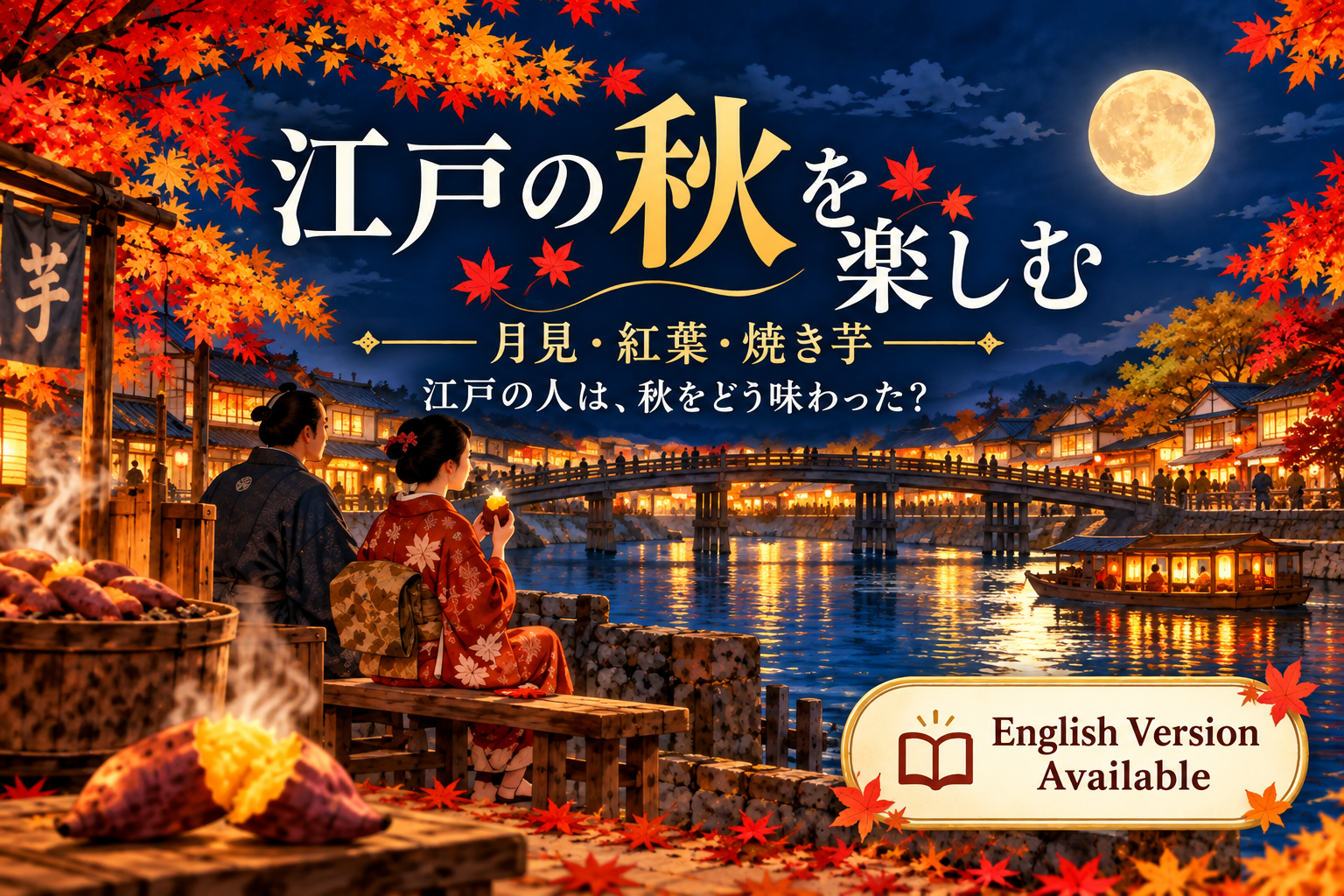
にぎやかな夏が過ぎると、江戸の町には、少し足を止めて楽しむ季節がやってきます。
月が昇るのを待つ、虫の声に耳を澄ます、色づく木々を見に出かける。 そして、焼き芋の香りに誘われる…江戸の人々が見つけた秋の楽しみは、今の私たちにもどこか身近に感じますね。
今回は、江戸の秋を五感でたどりながら、日本の季節を英語で伝える表現も一緒に見ていきましょう。
記事の後半には英語バージョンも載せていますので、日々の英語学習にもお役立てください!
- 月が昇るのを待つ――お月見
- 虫の声を聴きに行く――虫聞き
- 色づく景色を訪ねる――紅葉狩りと菊
- 秋の香りと味――焼き芋から今の食卓へ
- こんな時は英語で?
- さぁ、秋を探しに出かけましょう!
- 日本の秋は、見て、聴いて、味わう季節
- Autumn in Edo: A Season to See, Hear, and Taste
- Waiting for the Moon to Rise — Otsukimi
- Listening to the Sounds of Insects — Mushikiki
- Going Out to See the Colors — Autumn Leaves and Chrysanthemums
- The Smells and Flavors of Autumn — From Roasted Sweet Potatoes to Today’s Table
- How Can We Say It in English?
- Let’s Go and Find Autumn!
- Autumn in Japan — A Season to See, Hear, and Taste
月が昇るのを待つ――お月見
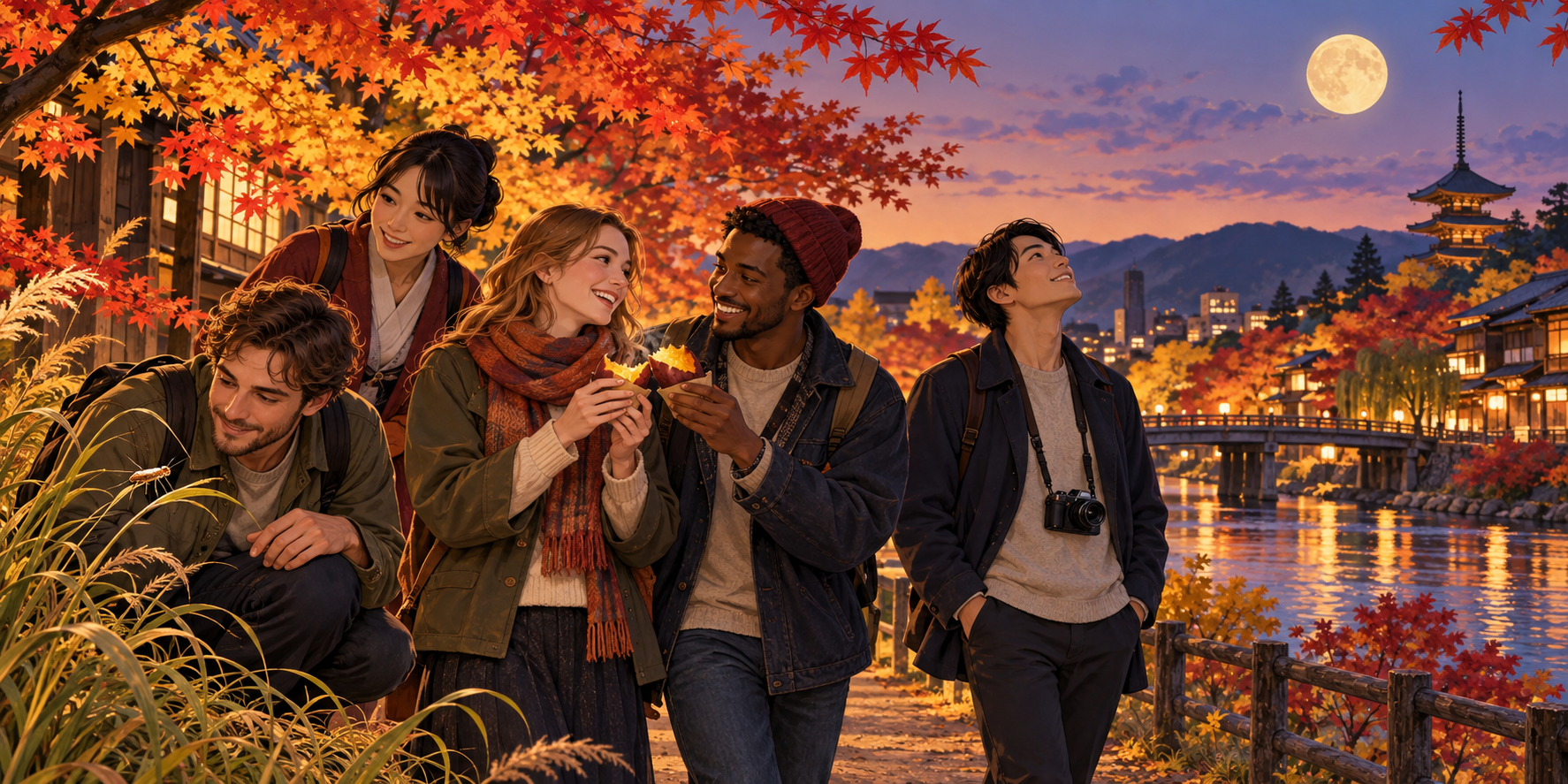
秋の夜空といえば、まずはお月見。 江戸時代には、人々が集まって月の出を待つ「月待ち」が行われていました。 十五夜だけでなく、十三夜や二十三夜など、月を眺める機会はいくつもあったそうですよ。 仲間と語り合いながらゆっくり月を待つ時間も、楽しみの一部だったのでしょう。 ろうそく以外に明かりがない時代だったので、満月は一際暗い夜を明るく照らしてくれたことでしょう。
月見の宴を描いた江戸時代の絵には、酒器や重箱も見えます。 静かに月を眺めるだけでなく、春に行うお花見のように、飲食をともにする楽しみもありました。 いいですね〜、月見酒…焼き鳥屋もあったら最高ですね!
さて、英語で「お月見」は moon viewing。 月をただ見るだけでなく、景色を味わう行事なんだよ、と外国の方々には伝えたいですね。 後ほど、このような秋の楽しみを説明する英語もまとめて紹介します。
春の季節文化も楽しみたい方へ
For Those Who Want to Explore Japan’s Spring Traditions
虫の声を聴きに行く――虫聞き
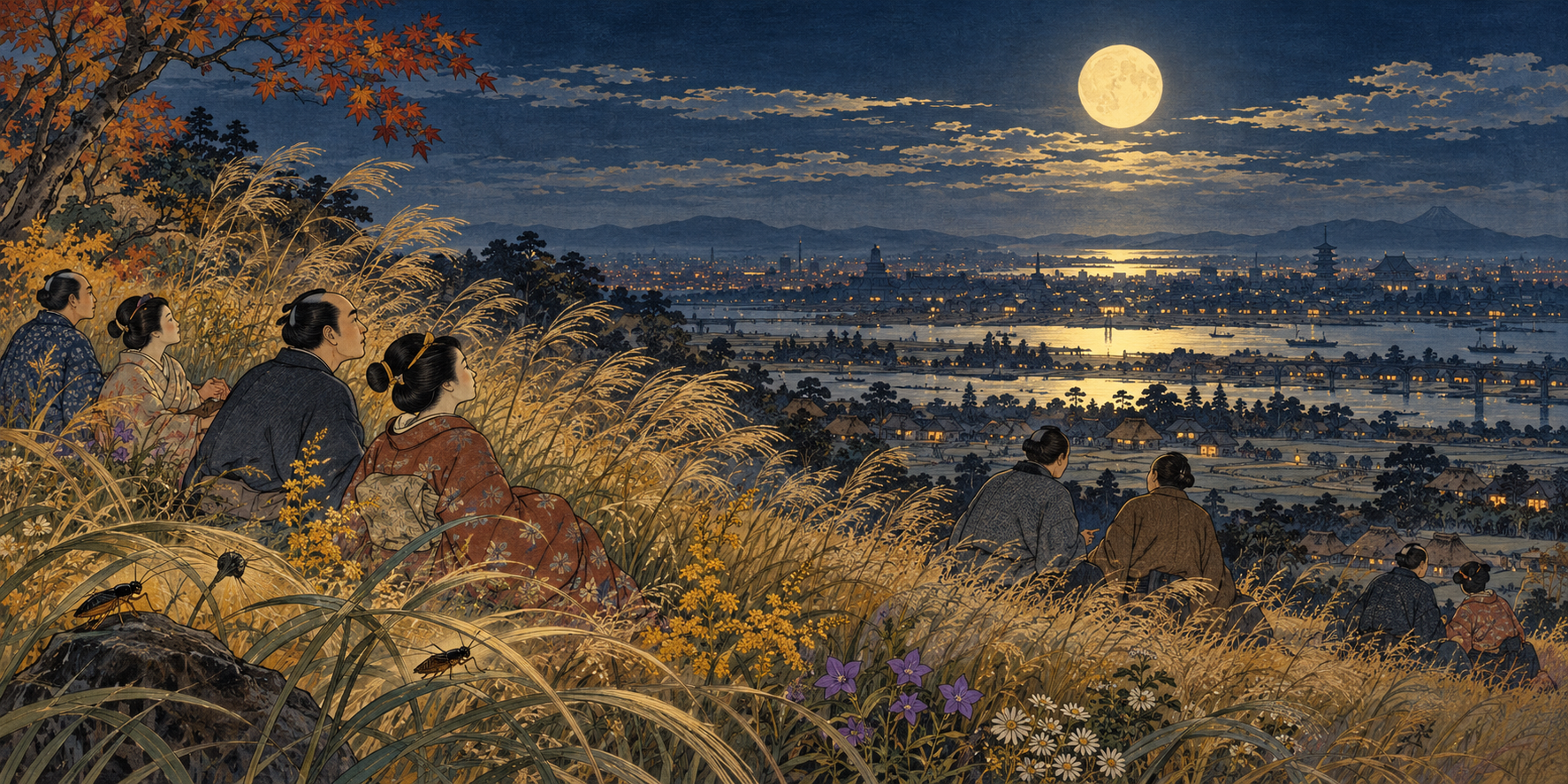
秋の江戸には、虫の声を聴きに出かける「虫聞き」という楽しみもありました。 「今夜は一緒に虫聞きなど、どうですか?」…おしゃれ〜!
現在の荒川区にある道灌山は、その「虫聞き」の名所として知られ、秋には月を見ながら松虫や鈴虫の音に聴き入る人々が沢山訪れました。 きっと今の時代よりももっと沢山の虫達がいたでしょうね。
音を立てて遊ぶのではなく、自然の小さな音を探しに出かける…そんな秋の過ごし方、なんとも粋!
ところで、日本語では「虫の声」と言いますが、これは日本人特有の感覚らしいですよ。 「あ〜れ〜松虫が〜鳴いている〜チンチロチンチロチンチロリン♫」なーんて歌もありますもんね!外国の方々に紹介するときは、どんな虫の音に耳を傾けるのか、まで話すと、光景が浮かびやすくなります。 夏は蝉が勢いよく鳴いてますが、秋はしんみりと鈴虫やコオロギ…日本の四季って、本当にいいもんですね〜
色づく景色を訪ねる――紅葉狩りと菊
さてさて、江戸の人々は、紅葉狩りにも出かけました。 「狩り」といっても、紅葉を捕まえるわけではありませんね。 色づいた景色を見て楽しむ行楽です。 「みかん狩り」や「ぶどう狩り」も秋のイベントとして有名ですが、こちらは実際に「狩る」ことを楽しむ行楽ですね。 こう見ると、秋はとても奥が深い!
ところで、栗はどうして栗狩り、って言わないんでしょうね? 栗拾い…落ちてるのを拾うからですかね?
秋のお花も見逃せません。 菊の出来を競ったり(学生の時にやりました!)、菊人形を楽しんだりする文化もありました。 月、虫、木々、花――江戸の秋には、今と変わらず、目と耳で味わう楽しみがいくつもあったのです。
秋の香りと味――焼き芋から今の食卓へ
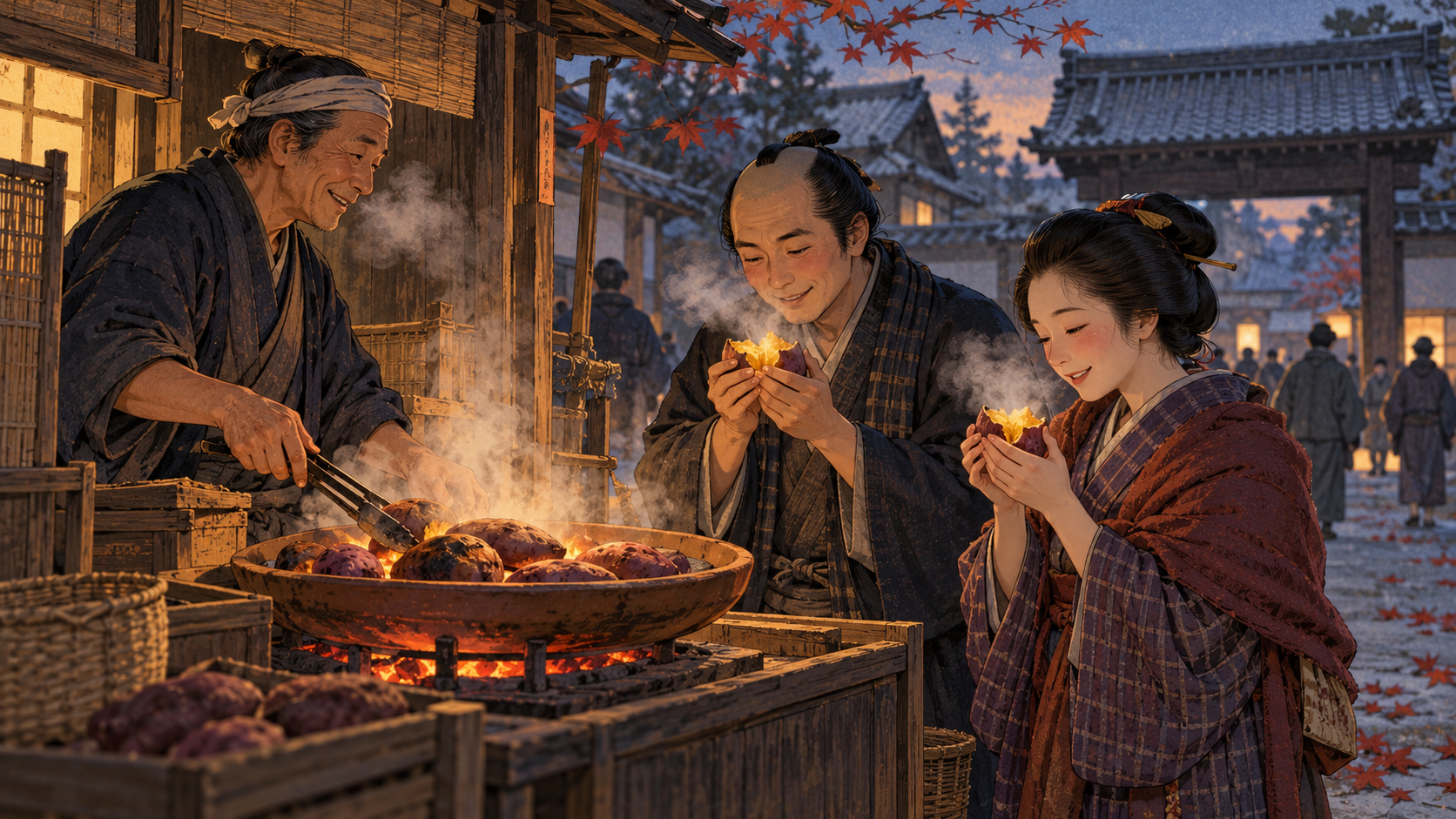
秋の楽しみには、やはりなんと言っても、おいしいものは欠かせません!
江戸の町では、焼き芋を売る店が現れました。 18世紀末の冬、本郷の木戸番が芋を蒸し焼きにして売ったという話が資料に残っています。 冷え始めた町で食べる温かい芋を想像すると、江戸の暮らしが急に近く感じられませんか? 北風で冷えた手を温めてくれる1番の方法だったかもしれませんね。
子供の頃、私はサツマイモが大好きだったので、親からは「芋ねーちゃん」と呼ばれていました。 もちろん今でもサツマイモはよく食べます。 でも、飼っている犬達がめちゃくちゃ欲しがるんですが、サツマイモ習慣を続けていたら2匹ともムチムチに太っちゃったので、なるべく一人でコッソリ食べています。
今の私たちなら、栗拾いに出かけたり、さつまいもやきのこを料理したり、秋刀魚を焼いたり…七輪で焼く秋刀魚の香りも、秋を感じる情景のひとつですね!
栗拾いやフルーツ狩りなど、秋の味覚を楽しみに出かけるのも、この季節ならではです。 自分で運転せず気軽に楽しみたいなら、日帰りのバスツアーを探してみるのもいいですね。 外国の方達にとっても、都心からですと、新宿、渋谷あたりから出発できるので便利です!

秋は果物もいいですが、きのこや根菜を温かい汁物にして、秋の香りにお出汁の旨味が重なって最高です! 土瓶蒸し、きのこご飯…ヨダレが止まりません…
旬の味を支える日本のお出汁を知りたい方へ
英語で誰かと話すなら、食材の名前を挙げるだけでなく、「どんな香りがするか」「どんなふうに誰と食べたいか」まで話してみると、季節の思い出が伝わります。 栗ご飯、芋ご飯、いい香りも色々ありますね!
秋の食材を料理しながら、英語も学びたい方へ
こんな時は英語で?
ここでは、日本の秋を英語で伝える練習をしてみましょう!
ただ日本語を一語ずつ置き換えるよりも、その場で何をするのかを短い言葉で添えてみましょうね。
秋の月を眺めるために集まります。
We gather to admire the autumn moon.
秋の虫の声に耳を傾けます。
We listen to the sounds of autumn insects.
紅葉を楽しみに出かけます。
We go out to enjoy the autumn leaves.
さつまいもは秋が旬です。
Sweet potatoes are in season in autumn.
あなたはどんな食べ物で秋を感じますか?
What foods remind you of autumn?
「紅葉狩り」は英語でどう表したら?
「紅葉狩り」を直訳した hunting autumn leaves では、葉を集めたり何かを捕まえたりする意味に受け取られるかもしれません。 まずは enjoy the autumn leaves(紅葉を楽しむ)と伝え、そのあとに「紅葉を見に出かけることを日本語では紅葉狩りと呼びます」と補うと、行事の意味まで伝わりますよ。 ぜひ試してみてください!
さぁ、秋を探しに出かけましょう!
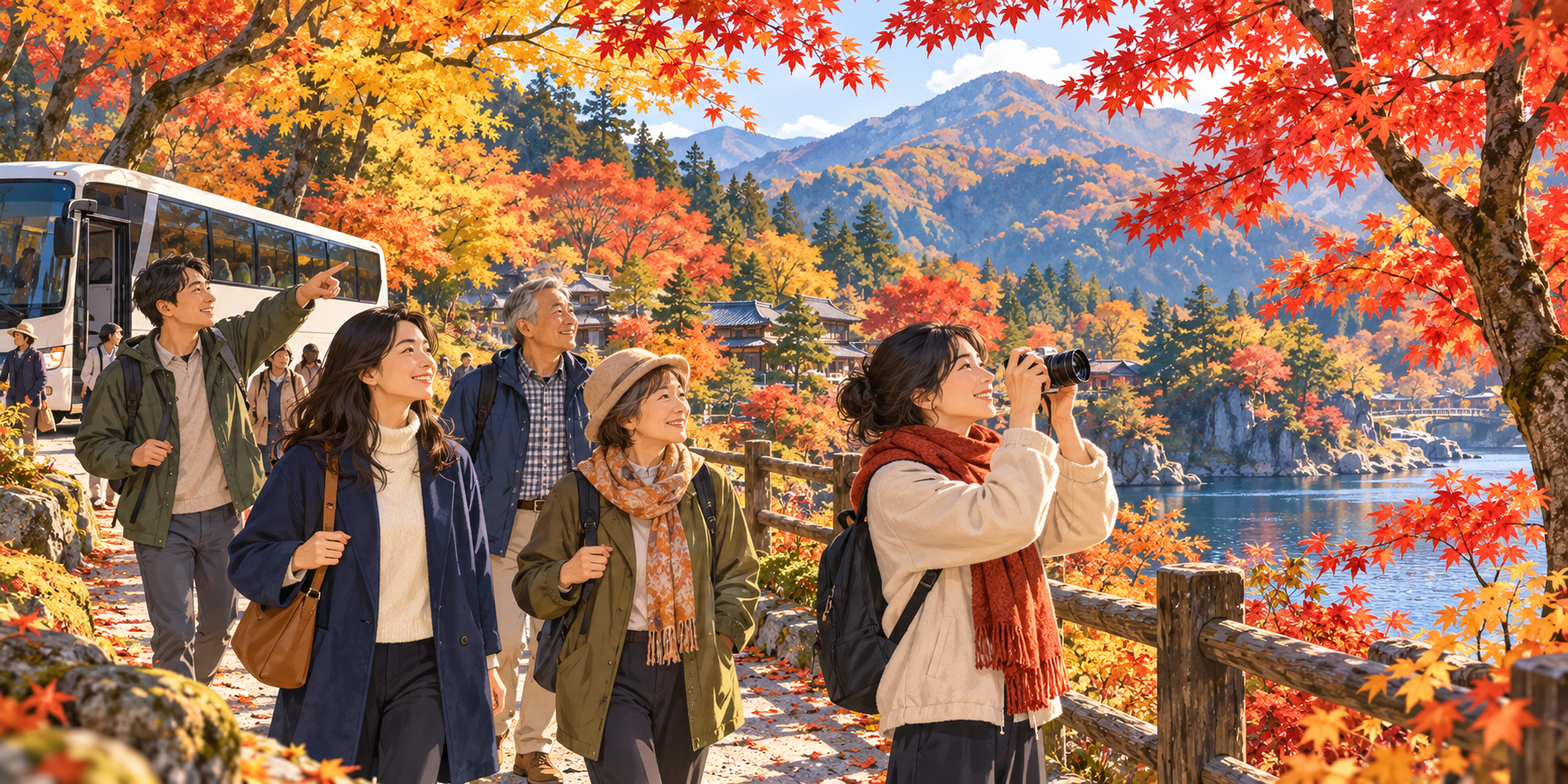
江戸の人々が、こぞって月や虫の声を求めて出かけたように、私たちも秋を探しに出かけてみませんか?
紅葉を眺め、果物を収穫し、旬のものを味わう、そんな日帰りの旅も楽しそうです。 夏の暑さからも少しだけ解放されて、窓を開けてドライブするのも気持ちがいい季節だと思います。 空も高く澄んできますよね!
果物狩りや栗拾いを組み込んだバスツアーなら、移動も含めて秋の一日を過ごせます。 行き先や時期によって楽しめる食材も変わるので、出発地や日程を見ながら、自分に合う旅を探してみてください。
行ってみたい場所、食べてみたいものを選んでから、バスツアーを探してみるのもいいですね!

日本の秋は、見て、聴いて、味わう季節
夏は外へ向かってはじける季節。 秋は、ふと立ち止まって、空を見て、音を聴いて、香りを感じ、味わう季節、なのかもしれません。 日本の四季は、それぞれの季節でみんな表情が違っていて、楽しみ方も様々で、何より、美味しいものも季節ごとに移り変わっていくので、食いしん坊には最高です!
月を見上げる、帰り道に虫の声を探す、旬の食材を一つ選んで、温かい料理を作る…そんな小さなことから、自分だけの秋を楽しんでみませんか?
小さい秋、みーつけたー♫ 私も、犬達とお散歩したり、ちょっと遠くへドライブしたりしながら秋を見つけてみよっと!
See, listen, and taste autumn in Japan.
日本の秋を、見て、聴いて、味わってみましょう!
最後まで読んでいただき、ありがとうございました!
Autumn in Edo: A Season to See, Hear, and Taste
Waiting for the Moon to Rise — Otsukimi
When the lively days of summer come to an end, a quieter season arrives in Japan — a season that invites us to slow down and enjoy the little things around us.
Waiting for the moon to rise, listening to the sounds of insects, going out to see the colorful autumn leaves…and being tempted by the delicious smell of roasted sweet potatoes. The ways people enjoyed autumn in Edo feel surprisingly familiar to us even today.
In this article, let’s experience autumn in Edo through the five senses while also learning some useful English expressions for talking about Japan’s seasonal traditions.
Let’s begin with one of the most familiar sights of autumn in Japan: the moon.
During the Edo period, people practiced a custom called tsukimachi, which literally means “waiting for the moon.” People gathered together and waited for the moon to rise. There were several occasions for moon viewing, including Jugoya, Jusanya, and Nijusanya.
Spending time talking with friends while slowly waiting for the moon to appear must have been part of the enjoyment. In a time when there were no electric lights and candles were one of the few sources of illumination at night, a full moon must have made the dark streets and countryside seem especially bright.
Pictures of moon-viewing gatherings from the Edo period sometimes show sake cups and stacked food boxes. So people did not simply sit quietly and admire the moon. Just like springtime hanami, eating and drinking together could also be part of the fun.
Sounds pretty good, doesn’t it? Sake under the moon…and if there had been a yakitori stand nearby, even better!
In English, お月見 (otsukimi) can be described as moon viewing. But when introducing the tradition to someone from another country, it is worth explaining that it is more than simply looking at the moon. It is a seasonal custom of appreciating the moon, the scenery, and the atmosphere of an autumn evening.
Want to Explore Japan’s Spring Traditions, Too?
What Is Hanami? Discover Japan’s Cherry Blossom Culture and Hanami in the Edo Period
Listening to the Sounds of Insects — Mushikiki
People in Edo also enjoyed an autumn pastime called mushikiki — going out specifically to listen to the sounds of insects.
“Would you like to go and listen to the insects tonight?”
That sounds rather elegant, doesn’t it?
Dokanyama, in what is now Arakawa City in Tokyo, was famous as a place for mushikiki. In autumn, many people visited the area to enjoy the moon while listening to insects such as bell crickets and other singing insects.
There must have been even more insects around in those days than there are in Tokyo today!
Instead of going somewhere noisy for entertainment, people went out in search of the tiny sounds of nature. There is something wonderfully stylish and refined about that way of enjoying an autumn evening.
Interestingly, in Japanese we often refer to these sounds as mushi no koe — literally, “the voices of insects.”
There is even a well-known Japanese children’s song that imitates the sounds of different autumn insects: chin-chiro, chin-chiro, chin-chiro-rin…
When explaining this custom to someone from another country, it can be helpful to describe which insects people are listening to and what their sounds are like. In summer, Japan is filled with the powerful chorus of cicadas. In autumn, the softer sounds of crickets and bell crickets take over.
Japan’s four seasons really do have their own soundtracks.
Going Out to See the Colors — Autumn Leaves and Chrysanthemums
People in Edo also went out to enjoy the autumn leaves.
In Japanese, this is called 紅葉狩り (momijigari). The word gari means “hunting,” but of course nobody is actually hunting autumn leaves! It simply means going out to enjoy beautiful landscapes filled with colorful autumn foliage.
Autumn also brings other activities ending in -gari, such as mikan-gari (mandarin orange picking) and budō-gari (grape picking). In those cases, you really do pick something.
And what about chestnuts? Why do we usually say kuri-hiroi, “chestnut gathering,” instead of “chestnut hunting”? Maybe because we pick them up after they have fallen to the ground!
Autumn flowers were another source of entertainment. People admired chrysanthemums, held competitions to see who could grow the finest flowers, and enjoyed elaborate chrysanthemum displays and chrysanthemum dolls.
I actually took part in a chrysanthemum-growing competition when I was a student!
The moon, insects, colorful trees and flowers — just as we do today, people in Edo found many ways to enjoy autumn with both their eyes and ears.
The Smells and Flavors of Autumn — From Roasted Sweet Potatoes to Today’s Table
And of course, no discussion of autumn would be complete without delicious food!
Roasted sweet potatoes became a popular treat in Edo. Historical records tell us that toward the end of the 18th century, a gatekeeper in Hongo began roasting and selling sweet potatoes during winter.
Imagine holding a warm sweet potato on a cold day as the north wind blows through the streets of Edo. Suddenly, everyday life in the Edo period does not seem quite so distant. A hot sweet potato may have been one of the best ways to warm cold hands!
I have always loved sweet potatoes. When I was a child, my parents even nicknamed me imo-nechan — something like “sweet-potato girl”!
I still eat them often today. The problem is that my two dogs absolutely love them too. After we developed a bit too much of a sweet-potato habit, both dogs became rather…chubby. So these days I try to eat my sweet potatoes secretly when they are not looking!
Today, we might go chestnut gathering, cook sweet potatoes and mushrooms, or grill sanma (Pacific saury). The smell of sanma grilling over charcoal is another scene that immediately feels like autumn in Japan.
Going out for chestnut gathering or fruit picking is also a wonderful way to enjoy the flavors of the season. If you would rather relax and let someone else do the driving, a day-trip bus tour can be a convenient option.
For international visitors staying in central Tokyo, bus tours departing from major areas such as Shinjuku or Shibuya can also be an easy way to explore places outside the city.
Club Tourism’s website can be viewed in English. Select “English” from the language menu at the top of the page.
Fruit is wonderful in autumn, but mushrooms and root vegetables are just as good. Put them into a warm soup and combine their autumn aromas with the umami of Japanese dashi stock — delicious!
Dobin mushi, mushroom rice…just thinking about them makes me hungry.
Want to Learn More About the Dashi Behind Japanese Seasonal Cooking?
When talking about autumn in English, try going beyond simply naming ingredients. Describe how the food smells, how it is prepared, or who you would like to share it with.
Chestnut rice, sweet potato rice…autumn in Japan is filled with wonderful aromas.
Want to Learn English While Cooking with Seasonal Japanese Ingredients?
Learn English Through Cooking | Useful Cooking Vocabulary and Japanese Recipes
How Can We Say It in English?
Now let’s practice talking about autumn in Japan in English!
Rather than translating Japanese expressions word for word, try adding a short explanation of what people actually do.
秋の月を眺めるために集まります。
We gather to admire the autumn moon.
秋の虫の声に耳を傾けます。
We listen to the sounds of autumn insects.
紅葉を楽しみに出かけます。
We go out to enjoy the autumn leaves.
さつまいもは秋が旬です。
Sweet potatoes are in season in autumn.
あなたはどんな食べ物で秋を感じますか?
What foods remind you of autumn?
How Can We Explain “Momijigari” in English?
If we translate momijigari literally as hunting autumn leaves, an English speaker might imagine people collecting leaves or actually hunting for something.
A more natural way to explain it is:
We go out to enjoy the autumn leaves.
Then you can add:
In Japanese, we call going out to see the autumn leaves “momijigari.”
This way, you are not simply translating the word — you are explaining the cultural tradition behind it.
Give it a try!
Let’s Go and Find Autumn!
Just as people in Edo went out in search of the moon, the sounds of insects and beautiful seasonal scenery, why not go out and find your own autumn in Japan?
Admiring colorful leaves, picking fruit and tasting seasonal foods can make a wonderful day trip.
The intense heat of summer has finally begun to ease, making autumn a lovely season for traveling. Even a drive with the windows open can feel wonderful, and the sky seems higher, clearer and bluer at this time of year.
A bus tour that includes fruit picking, chestnut gathering or autumn foliage can be an easy way to enjoy an entire autumn day without worrying about driving or planning all the transportation yourself.
The foods and scenery you can enjoy will change depending on the destination and the time of year, so take a look at the departure points, dates and destinations and find a trip that sounds right for you.
Choose somewhere you would love to visit — or something delicious you would love to eat — and see where an autumn bus tour could take you! Select “English” from the language menu at the top of the page.
Autumn in Japan — A Season to See, Hear, and Taste
Summer is a season that seems to burst outward with energy. Autumn, on the other hand, may be the season when we slow down for a moment, look up at the sky, listen to the sounds around us, notice the aromas in the air, and enjoy the flavors of the season.
One of the wonderful things about Japan’s four seasons is that each one has a completely different character. The scenery changes, the ways we spend our time change, and — perhaps best of all for those of us who love food — the things we eat change with the seasons too!
Look up at the moon. Listen for the sounds of insects on your way home. Choose one seasonal ingredient and cook something warm.
You do not need to plan anything extraordinary. Small moments like these can become your own way of enjoying autumn.
As a Japanese children’s song says, “Chiisai aki, mitsuketa” — “I found a little autumn.”
I think I’ll go looking for my own little signs of autumn too, while walking my dogs or taking a drive somewhere a little farther from home!
See, listen, and taste autumn in Japan.
Enjoy autumn with all your senses!
Thank you for reading!